


A pigment that gets everywhere
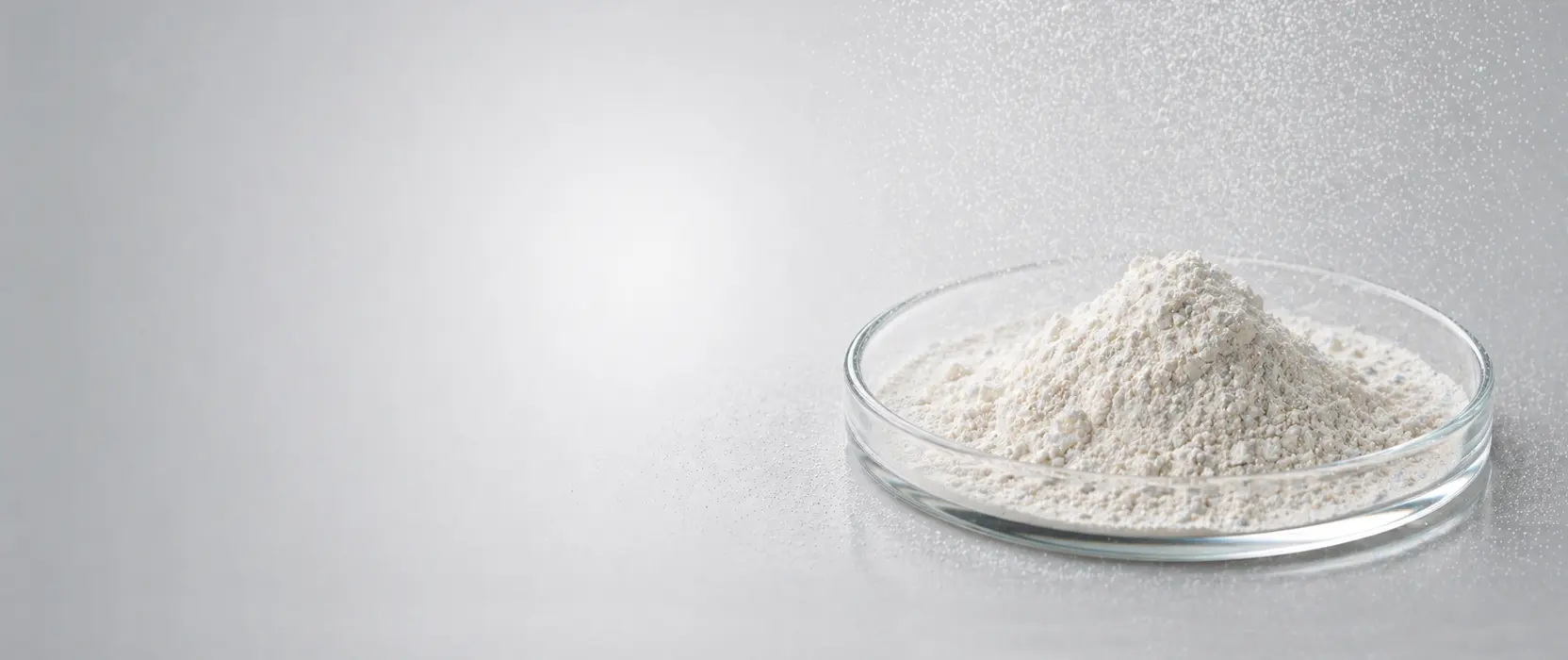
Titanium dioxide is one of the most widely produced inorganic pigments worldwide. It is manufactured, transported, and packaged in powder form—in quantities where even minimal dust emissions lead to a permanent white discoloration of the entire production environment. The pigment is extremely fine, adheres to nearly all surfaces, and remains suspended in the air longer than coarser dusts.
In filling plants, pigment contamination does not result from a single uncontrolled moment, but occurs continuously—during the filling of big bags, when hoses are connected, and during the inevitable transfer of material between process steps.
Why Sweeping Doesn’t Solve the Problem
When titanium dioxide settles on the floor, the obvious solution seems simple: sweep or mop regularly. In practice, however, sweeping does not solve the problem—it merely shifts it. A significant portion of the fine powder is stirred up during sweeping and settles elsewhere. The cleaning effort increases, while the dust load in the environment remains.
The common assumption is that a well-designed inline extraction system directly at the process is sufficient to keep the environment clean. That is not true. Even with consistent source extraction, some of the fine pigment enters the environment—through leaks, material carryover, or air movement in the room. Downstream cleaning extraction is not a sign of inadequate inline extraction, but rather a separate, necessary system component.
Source extraction and cleaning extraction: two different tasks
The solution lies in clearly separating the two tasks. Source extraction—the capture of dust directly at the point of origin—and cleaning extraction are different systems with different requirements. Anyone who tries to combine both in a single system usually overloads one of them. What matters is not the maximum capacity of a system, but the clear separation of tasks.
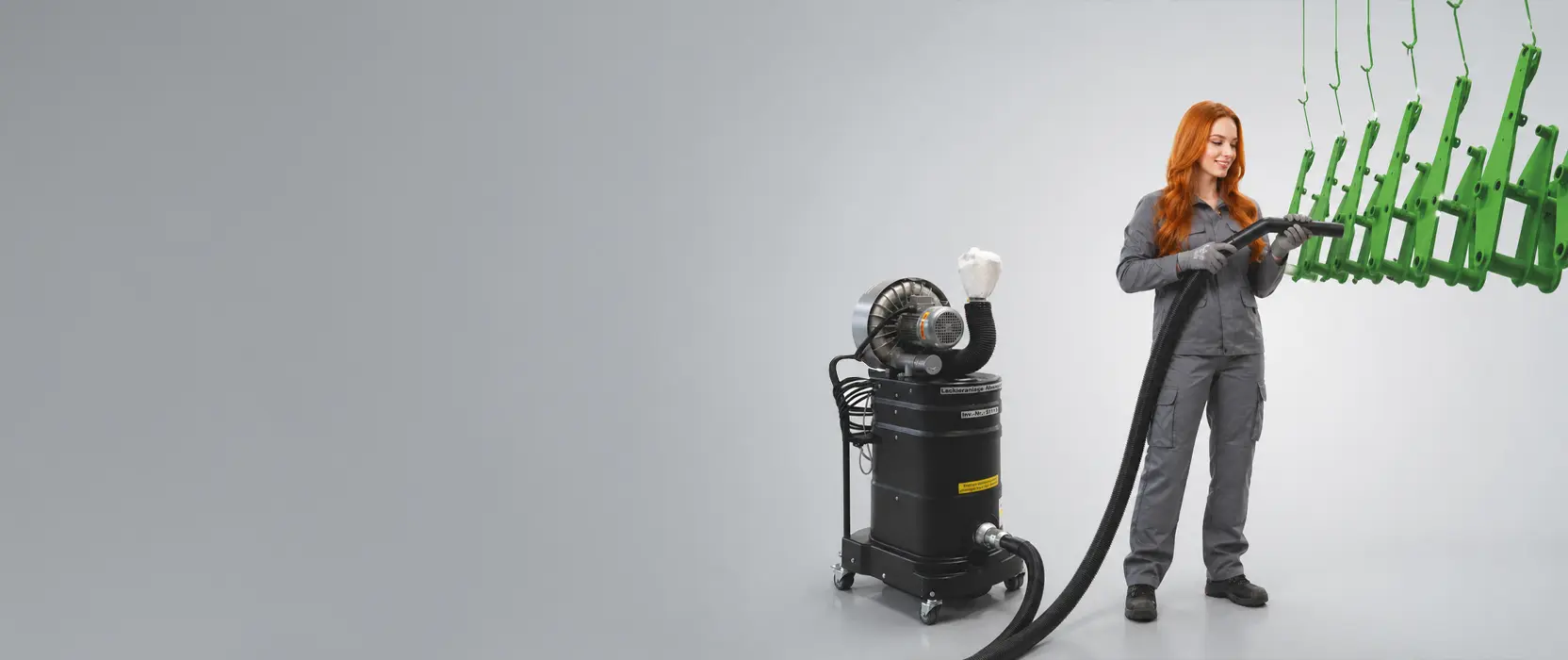
For cleaning extraction in the vicinity of a titanium dioxide filling plant, this means in practice: A central system with multiple extraction points allows floors, filling plants, and big-bag stations to be cleaned as needed without dispersing stirred-up material into the surrounding area. The operator inserts the hose into the nearest extraction port—the system takes care of the rest.
All the extracted pigment is collected centrally in a big bag. A load cell continuously monitors the fill level and signals when a replacement is needed—without manual checks and without unplanned interruptions to operations.
What a well-designed system offers in addition
Two additional features are relevant in this context. Demand-based power control adjusts the suction power to actual needs—this noticeably reduces energy consumption during periods of low load. And a remote diagnostics function allows adjustments to be made to the operating mode or provides support in the event of malfunctions without requiring a technician to be on site.
Both features are not additional functions, but rather the result of a system design that focuses on ongoing operation—not just commissioning.
Classification
In such applications, it becomes clear that industrial extraction technology is most effective when source extraction and cleaning extraction are conceived as independent, coordinated system levels.
For this application, RUWAC has implemented a central cleaning system with four extraction points, big-bag disposal with a load cell, demand-based power control, and remote diagnostics—as a supplement to an existing inline extraction system, not as a replacement. Such systems can be expanded to meet changing requirements without replacing the existing system.