


- Function: Separation of large amounts of material before the vacuum cleaner
- Benefits: Significantly reduced filter loading and more stable suction performance
- Application: Dust, chips, and liquids generated in industrial processes
- System: Upstream component within RUWAC extraction systems
- Process advantage: Early separation of the material flow instead of downstream filtration
- Safety: Controlled material flow reduces strain and risks within the system
- ROI: Longer service life, less maintenance, lower operating costs
pre-separator
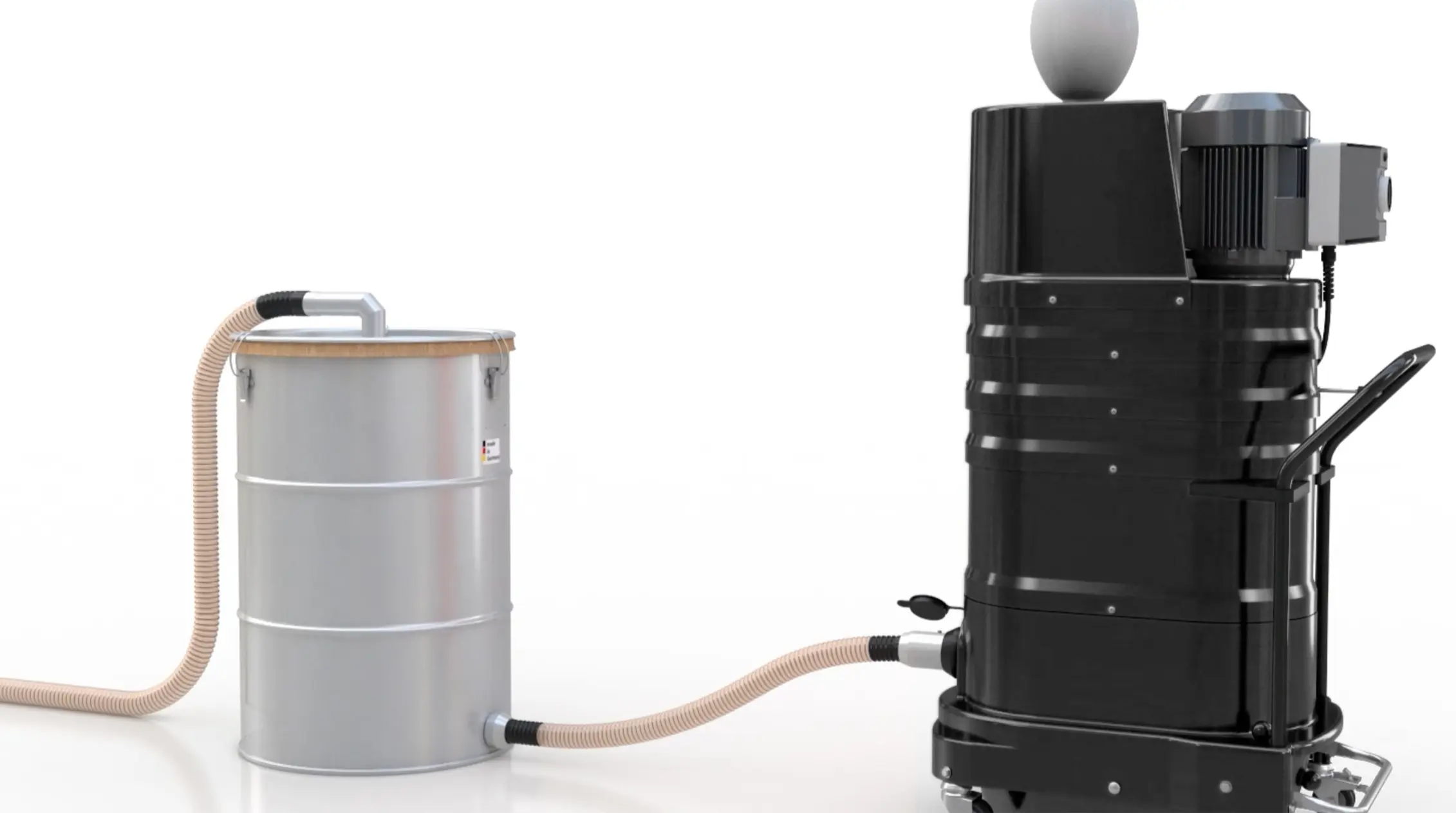
Disconnected upstream of the suction unit. Noticeably reduced load during operation.
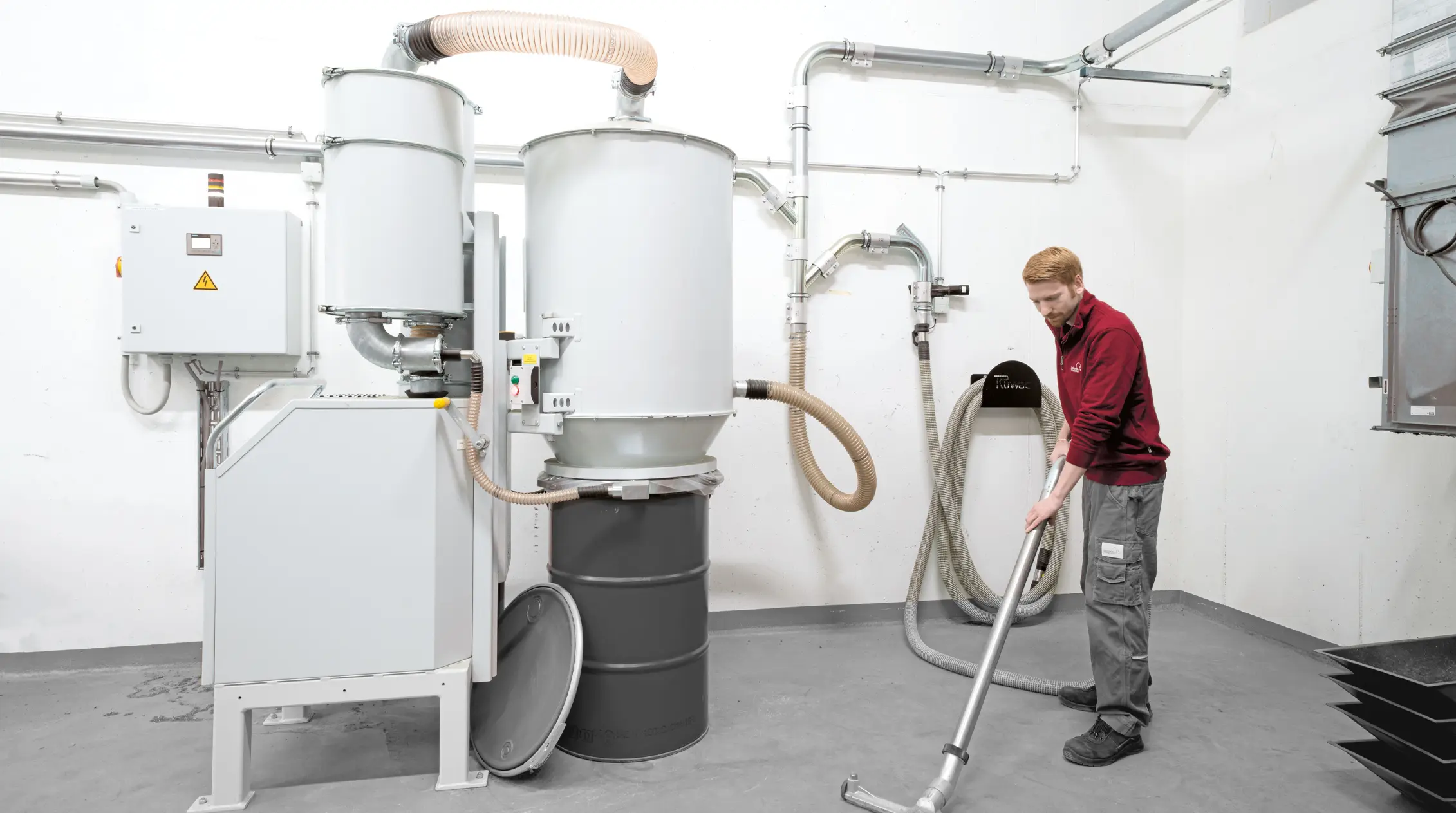
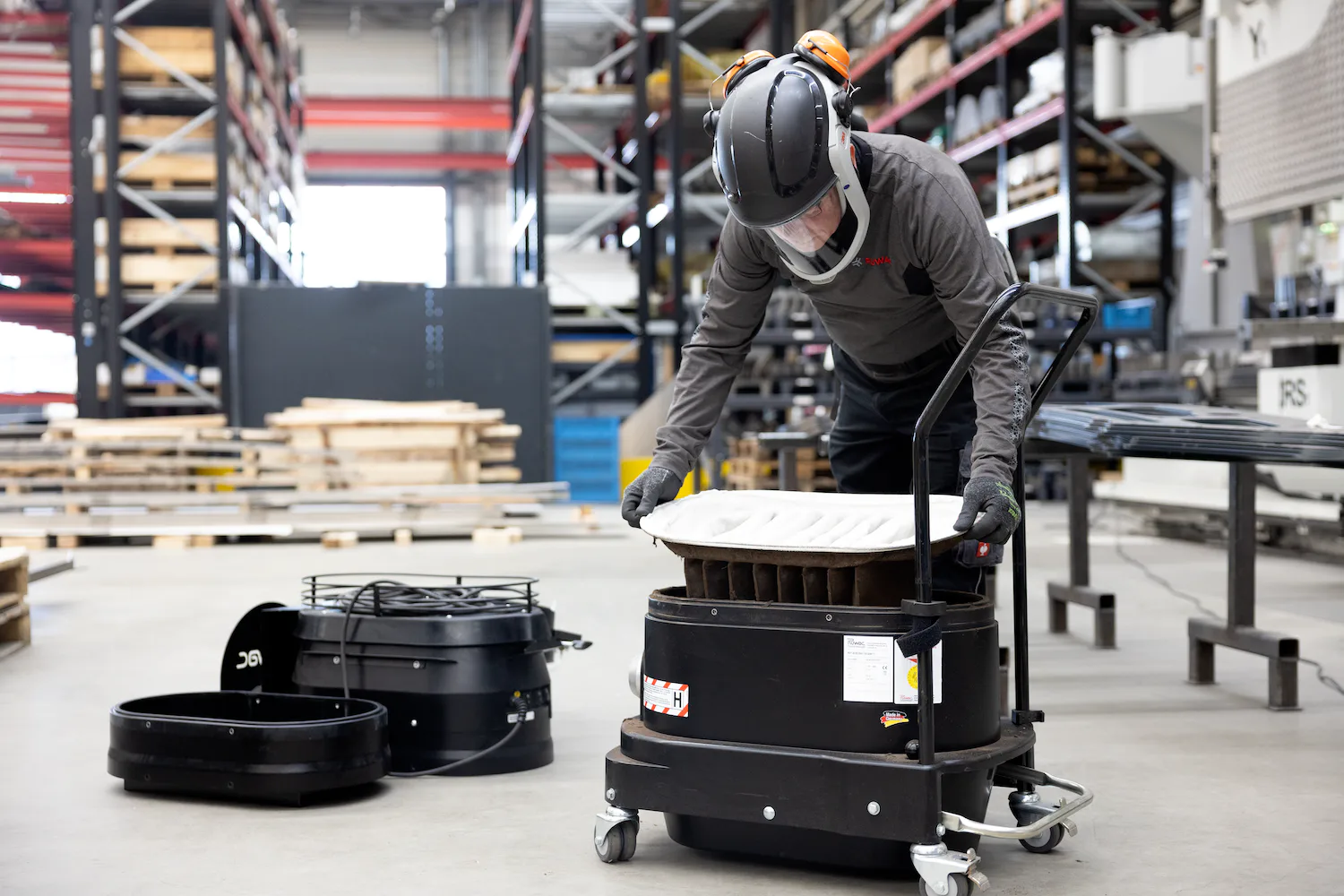
Pre-separation systems separate large quantities of material before it reaches the vacuum cleaner. This reduces the load on filters and equipment—and stabilizes the extraction process throughout operation. It is not the component itself that matters, but its position in the system: material is directed early on rather than filtered later. Different principles are used depending on the application. Large-volume systems are available for bulky materials such as lint or cutting scraps. Cyclone solutions enable continuous separation—even under increased requirements such as DustEx. Pre-separator tanks cover a wide range of media, from dry to liquid. Pre-filter cells are designed for coarse, long-fiber, or textured materials. This results not in a standard product, but in a customized system solution tailored to the specific material flow.
The Highlights
Monitor material flows early on. Don’t try to make up for it later.
In many extraction processes, all material is fed directly into the vacuum cleaner. Large volumes, abrasive particles, or varying materials come into unfiltered contact with filters, blowers, and system components. The result: increased filter loading, unstable suction performance, and growing maintenance requirements.
Pre-separation systems intervene earlier. They separate material streams before they reach the actual extraction system. Large and heavy particles are specifically separated, while the airflow continues with significantly reduced load.
This changes not only individual components but also the behavior of the entire system. Filters operate under more consistent conditions, suction power remains stable, and processes become predictable—even with high or fluctuating material volumes.
Pre-separation is therefore not an add-on, but a decision regarding where in the system material is controlled.
Shift the load
Material is separated before the filter and is not processed in the vacuum cleaner first.
Maintain a stable flow rate
- Consistent flow rate even with high or fluctuating material volumes.
Make maintenance predictable
- Lower filter load reduces maintenance and downtime.
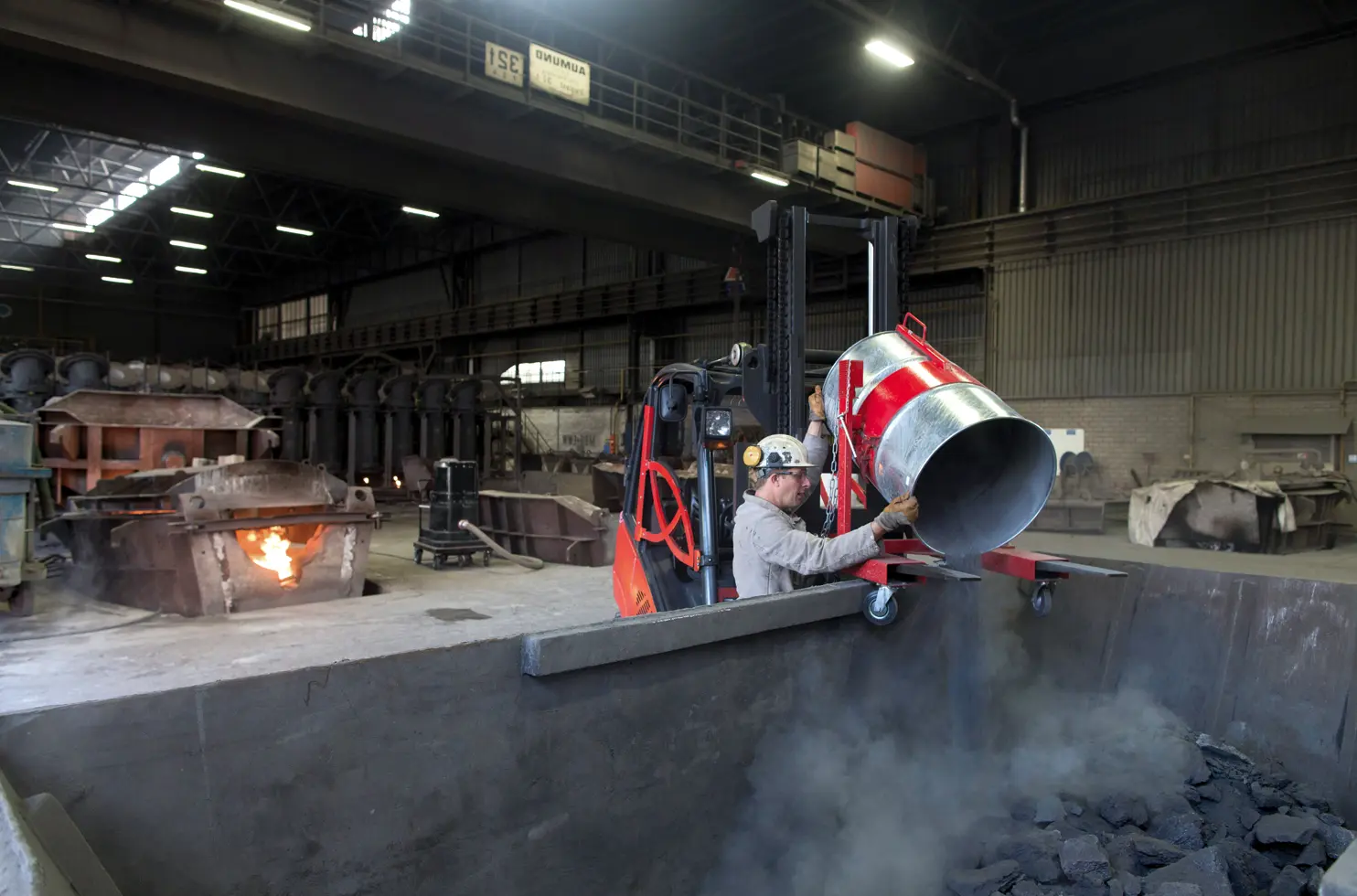
Pre-separation systems have different design variants depending on the material, volume, and process. What matters is not the design itself, but how it directs the material flow and reduces the load on the downstream system.
Container systems flexibly accommodate large volumes and enable simple emptying concepts. Cyclone solutions continuously separate material from the air stream and are suitable for steady-state processes with high throughput. Pre-filter cells are designed for coarse, long-fiber, or structured materials and create stable conditions when handling difficult-to-suction materials. Systems such as the DAV-SB are designed for voluminous materials and ensure that large quantities of material can be collected in a controlled manner.
This results in a coordinated overall system composed of different designs—not as a standard solution, but tailored to the specific application.
Principle over design
- What matters is the function within the process, not the external design variant.
Designed to match the material
- Volume, structure, and properties determine the appropriate solution.
Designed as a system
- Each design fits into the overall process and specifically reduces the load on downstream components.
Strong in the details.
Pre-separation systems differ not only in their design but, above all, in the underlying separation principle. This principle determines which materials can be reliably separated and under what conditions the system operates stably. What matters is not the individual principle itself, but how well it suits the material, the process, and the relevant safety requirements.
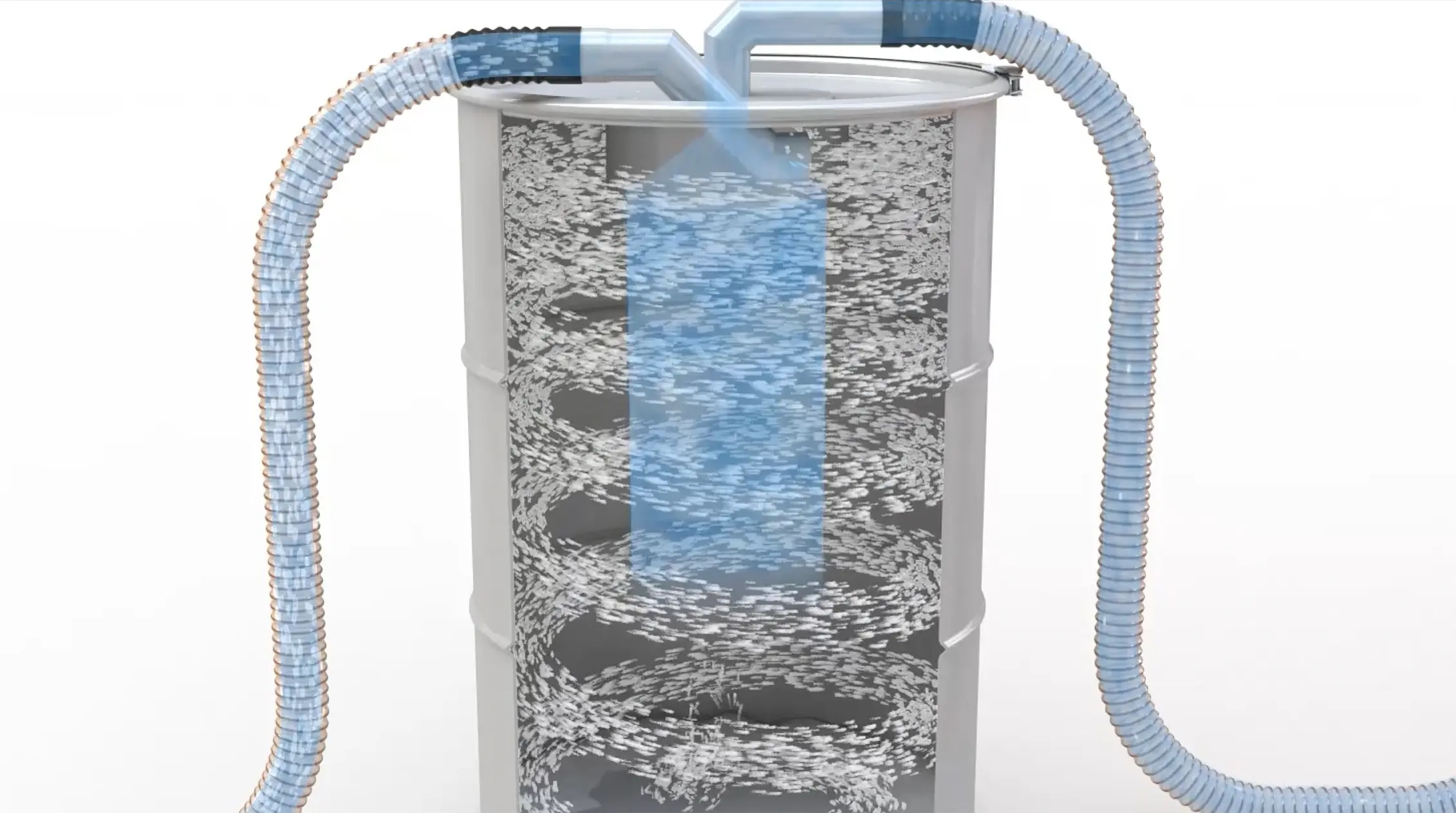
Separation through movement.
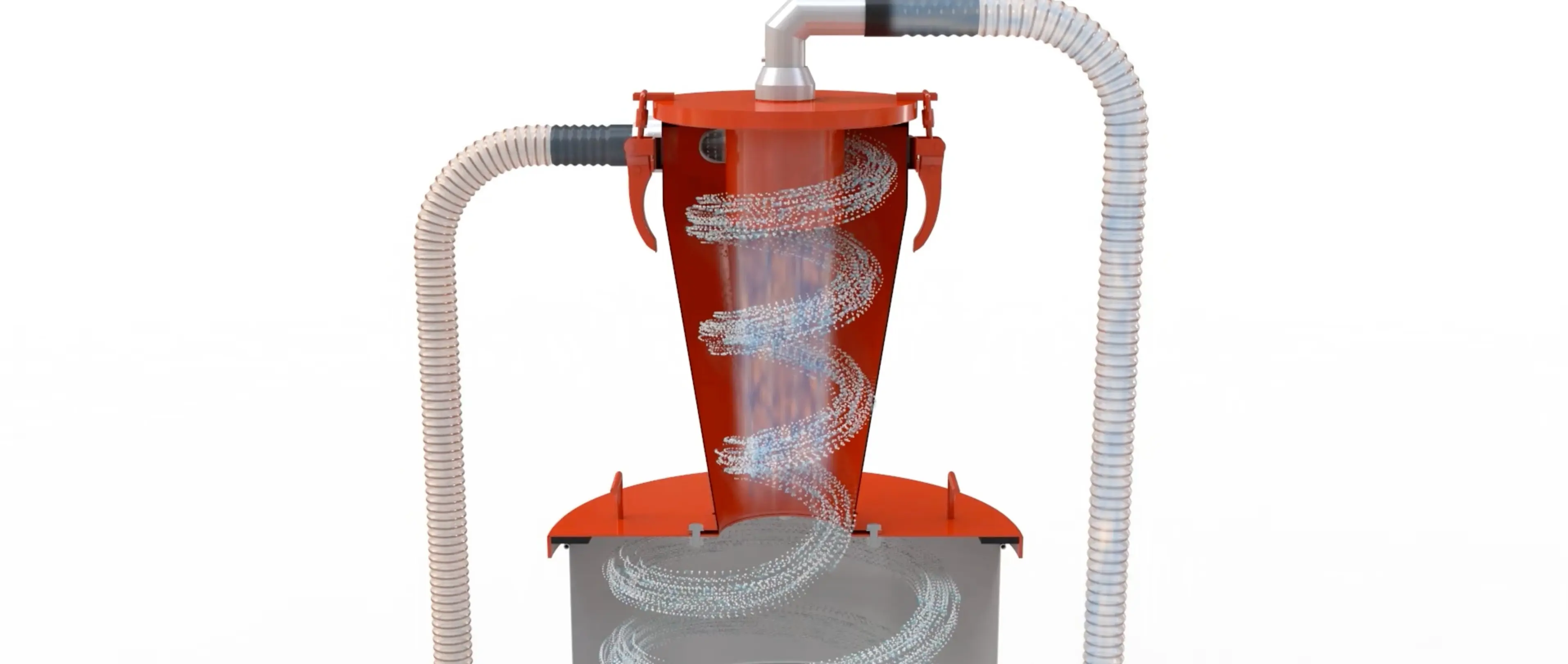
Cyclone pre-separators use a rotating flow to remove particles from the airstream via centrifugal force. This principle is particularly well-suited for dry, free-flowing materials such as dust, chips, or granules. In metal and plastics processing, construction, or bulk material handling, it enables effective coarse separation—without the need for additional filter media.
The fluid remains in the system. Not in the suction tube.
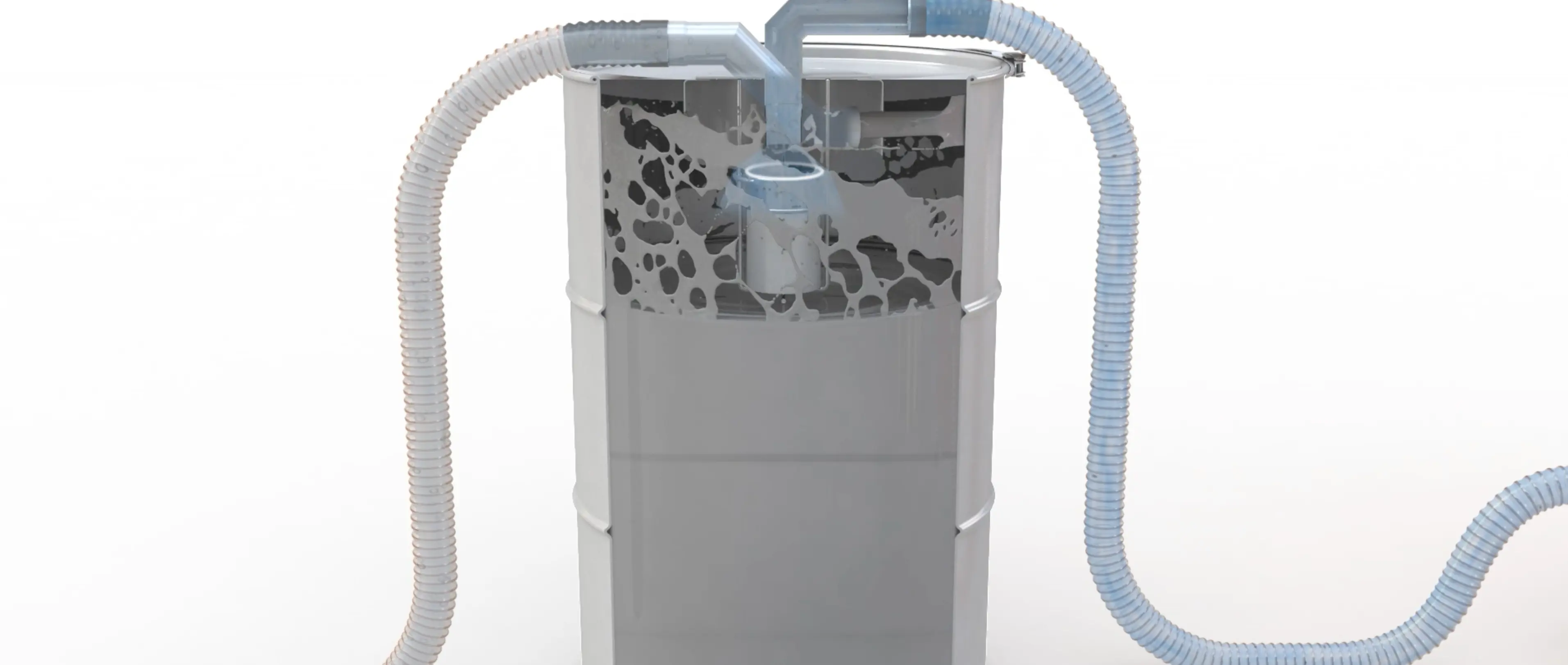
Liquid pre-separators work by effectively separating air from liquid. Fluids such as coolants, oils, or emulsions are reliably separated before they enter the suction system. This protects downstream components from moisture ingress and ensures proper operation even in wet or mixed applications.
Security starts before the system.
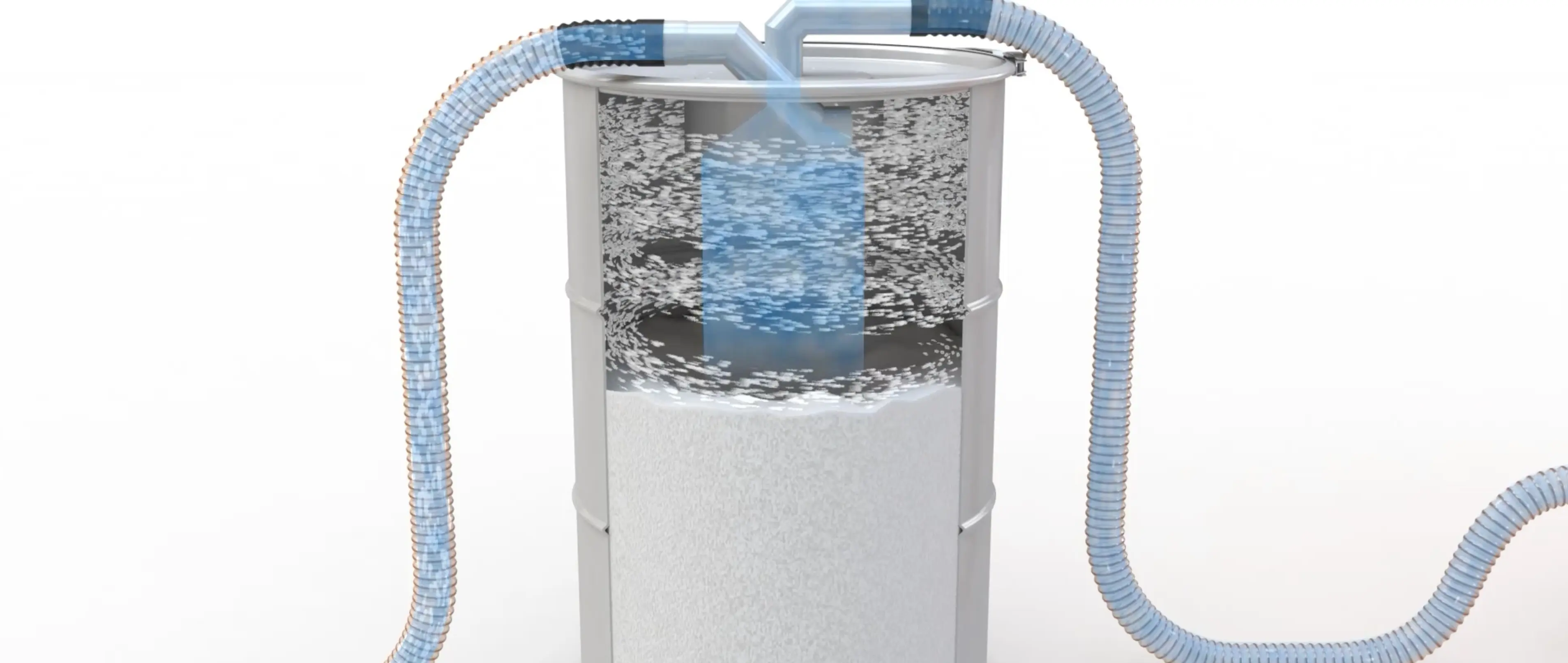
ATEX-compliant pre-separators are used in applications involving explosive or conductive dusts. They also rely on mechanical pre-separation, but are designed to meet heightened safety requirements—for example, through the use of conductive materials and defined grounding concepts. Typical applications include the chemical and pharmaceutical industries, additive manufacturing, and the handling of critical powders.
Maintenance that goes the extra mile.
Industrial vacuum cleaners have to work—all the time. With over 20 service technicians throughout Germany, we’re there when you need us. In person. Quickly. Right on site.
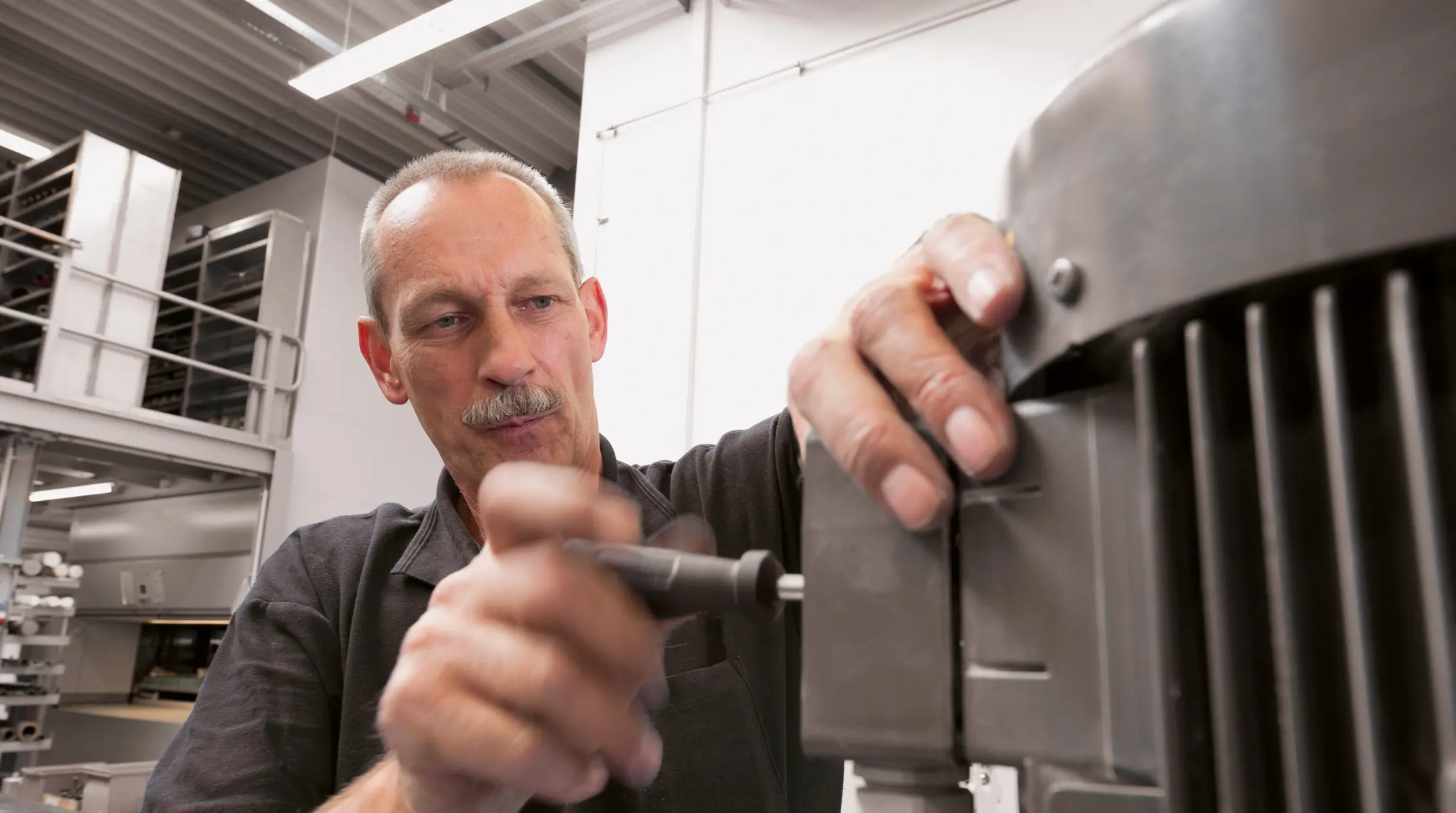
Our experts are highly qualified and know your machine inside and out. They typically carry replacement and wear parts, as well as all necessary tools, right in their vehicles. This allows many problems to be solved immediately—without any waiting time.
Ruwac Service keeps your production running, protects the value of your investment, and extends the service life of your equipment. And with predictable maintenance costs, you retain full control at all times.
Protects what matters. Without compromise.
What sets RUWAC apart is that we take responsibility. For people, processes, the environment—and for the moment when it really counts. Our equipment is designed for maximum safety. And so are we. From explosion protection to health and sustainability to fast on-site service: at RUWAC, safety means you can rely on everything. And on everyone.

Product safety
Our industrial vacuums meet the highest safety standards - optionally with ATEX certification, a robust design, and well-thought-out protection mechanisms. For permanently safe operation - even under extreme conditions.

Workplace safety
Ergonomic design, easy handling, and clearly recognizable controls reduce risks in everyday work - and create more safety directly at the point of use.

Health protection
We filter before danger arises: our systems minimize fine dust exposure, reduce noise emissions, and actively contribute to workplace health protection.

Environmental protection
Sustainability is an integral part of our development process. Our systems are energy-efficient, built to last, and made from recyclable materials.

Fast local support
Safety through proximity: our sales and service teams are deployed nationwide - with experience, technical know-how, and what often matters most: availability. Our service technicians carry many spare parts directly in their vehicles - for immediate help without waiting.

Investment security
A Ruwac lasts. High-quality components, modular technology, and reliable support safeguard your investment - today and for many decades to come. This creates real operational security - backed by manufacturing in Germany that sets standards in sustainability, efficiency, and occupational safety.
In-depth insights.
Frequently Asked Questions (FAQ)
A pre-separator becomes essential when dealing with large volumes of material, abrasive particles, or varying types of material. Without pre-separation, all the material enters the vacuum cleaner directly, causing the filters to become clogged more quickly and reducing suction power. In such applications, the pre-separator is not merely an optional addition but a prerequisite for stable operation.
No. A pre-separator handles the coarse separation, thereby reducing the amount of material that enters the vacuum cleaner. Fine filtration continues to take place within the vacuum cleaner itself. Both components perform different functions and are designed to work together.
This depends not only on the design, but also on the material and the process. Bulky or textured materials require different solutions than fine or continuous-flow materials. The key factor is how the material flow should be guided—not which system appears simplest at first glance.
All of the material being sucked in comes into direct contact with the filters and equipment. This increases the load on the filters, which can reduce suction power and shorten maintenance intervals. Especially when material volumes are high or fluctuating, this leads to unstable processes and higher operating costs.
In most cases, yes. Pre-separators are designed to integrate into existing extraction systems—both mobile and stationary. It is crucial to match them to the airflow, material, and waste disposal plan so that the entire system continues to function reliably.
technical data.

DAV-SB pre-separator system

Cyclone Pre-separator System

Pre-separation tank

Pre-filter cell
Housing
sheet steel
Motor power (kW)
2.2 – 4.0
Voltage (V)
400
Vacuum pressure (mbar)
-210 – -240
Vacuum pressure (short-term) (mbar)
-335
Air flow rate (m³/h) (measured with a 3-meter hose)
285
Sound pressure level (dB(A)) (DIN EN ISO 3744)
68
Cell filter, dust class L, M (m²)
1
Height (mm) (dust class H)
1,300
Width (mm)
600
Length (mm)
600
Protection class IP
65
Capacity (liters)
130
Suction Inlet (mm)
70
Housing
GRP, stainless steel
Housing
Stainless steel, galvanized sheet steel
Capacity (liters)
35–200
Suction Inlet (mm)
50–100
Housing
Stainless steel, galvanized sheet steel
Capacity (liters)
35–200
Suction Inlet (mm)
50–100
Disconnected upstream of the suction unit. Noticeably reduced load during operation.