


Gas explosion protection
Atmosphere
Explosive gas-vapor-air mixtures often form under specific circumstances—such as during equipment changes, leaks, or manual interventions. What matters is not the gas itself, but the moment when a hazardous atmosphere forms. RUWAC monitors emissions close to the process, reduces ignition risks, and integrates GasEx protection into real-world operations—in a traceable, application-oriented, and permanently effective manner.
Gas is invisible. The risk is not.
Many hazards in gas explosion protection do not result from technical failures, but from incorrect assumptions made in everyday situations.
Gas leaves no room for error. Neither does safety.
Effective gas explosion protection does not begin with the product, but with the design. The key factor is how gases and vapors are generated, spread, and vented in the actual process.
Safe solutions must operate preventively. Gases must not be allowed to accumulate but must be detected, contained, or diluted early on—before a hazardous atmosphere develops. This requires clearly defined flow paths, controlled airflow, and technology that remains stable even under changing operating conditions.
Equally crucial is the avoidance of ignition sources. Materials, drives, controls, and accessories must be selected so that they pose no risk even in the event of a failure. Electrical safety, conductivity, and physical separation are not mere details but fundamental requirements.
Added to this is practicality. EX explosion protection must function where people work, systems are opened, and processes do not run perfectly. Solutions that are safe only on paper fail in everyday use.
Safety in gas EX areas is not an add-on module.
It is the result of a consistently well-thought-out comprehensive solution.
Gas EX risks arise in specific industries—not in the laboratory.
Gas and steam explosion hazards occur wherever volatile substances are used, processed, or handled. Industries with open or partially open process steps, manual interventions, and fluctuating operating conditions are particularly at risk.
These include, among others:
- Chemical industry – when handling solvents, reaction gases, and process media
- Pharmaceutical production – during dosing, filling, and cleaning
- Food and beverage industry – for example, with alcohol, cleaning media, or fermentation processes
- Energy and battery technologies – when using electrochemical and volatile substances
What these industries have in common is not the substance, but the situation:
Gas EX risks arise in everyday operations—not just in exceptional cases.
Safety concepts must therefore be effective where processes actually take place. Under load. Under time pressure. And with people in the system.
Practice born of necessity.
Gas EX protection isn’t determined during the planning phase, but rather during operation—where processes change, interventions are necessary, and operations don’t always go as planned. The following examples illustrate typical situations in which gas EX risks arise—and what matters in practice.
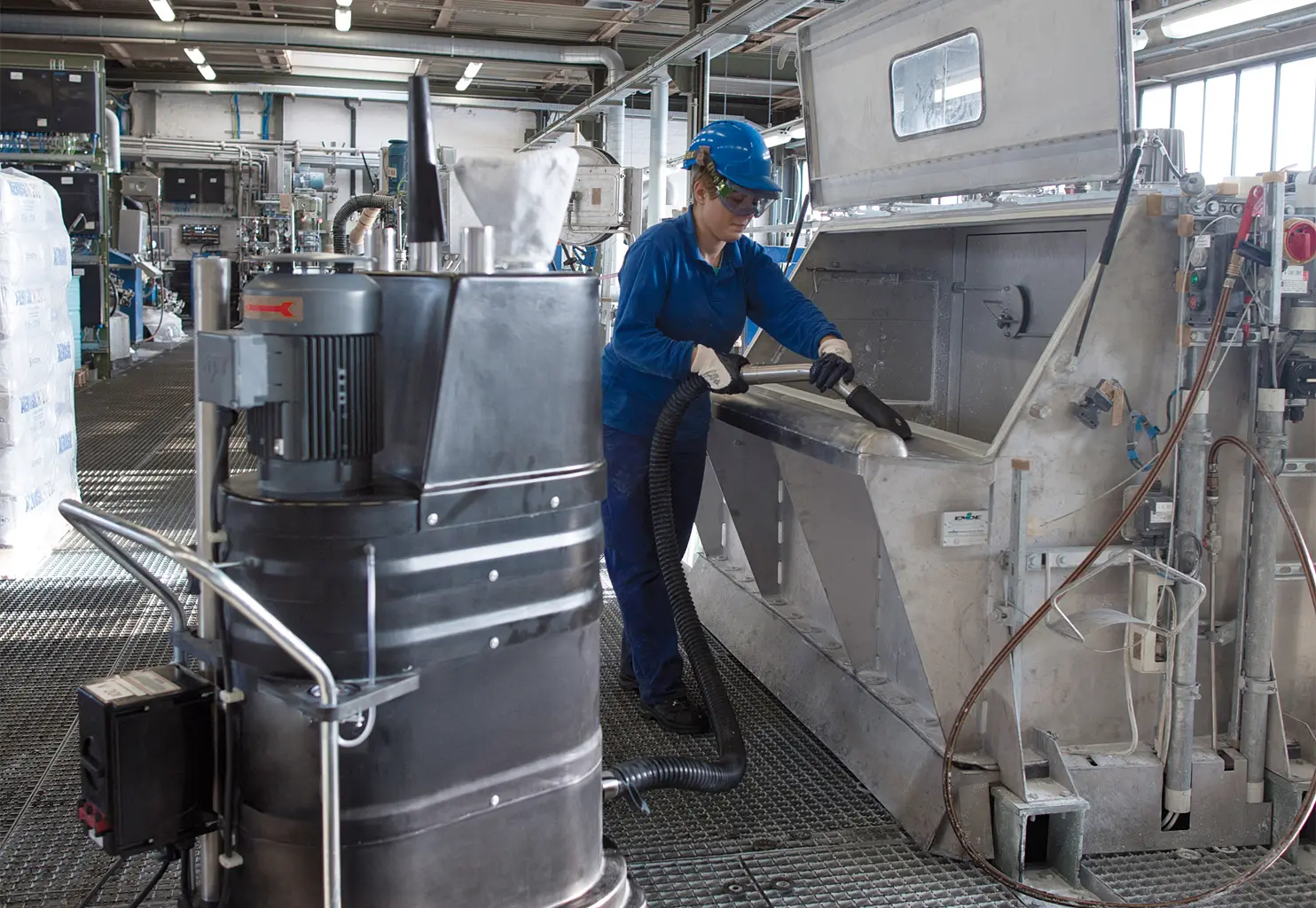
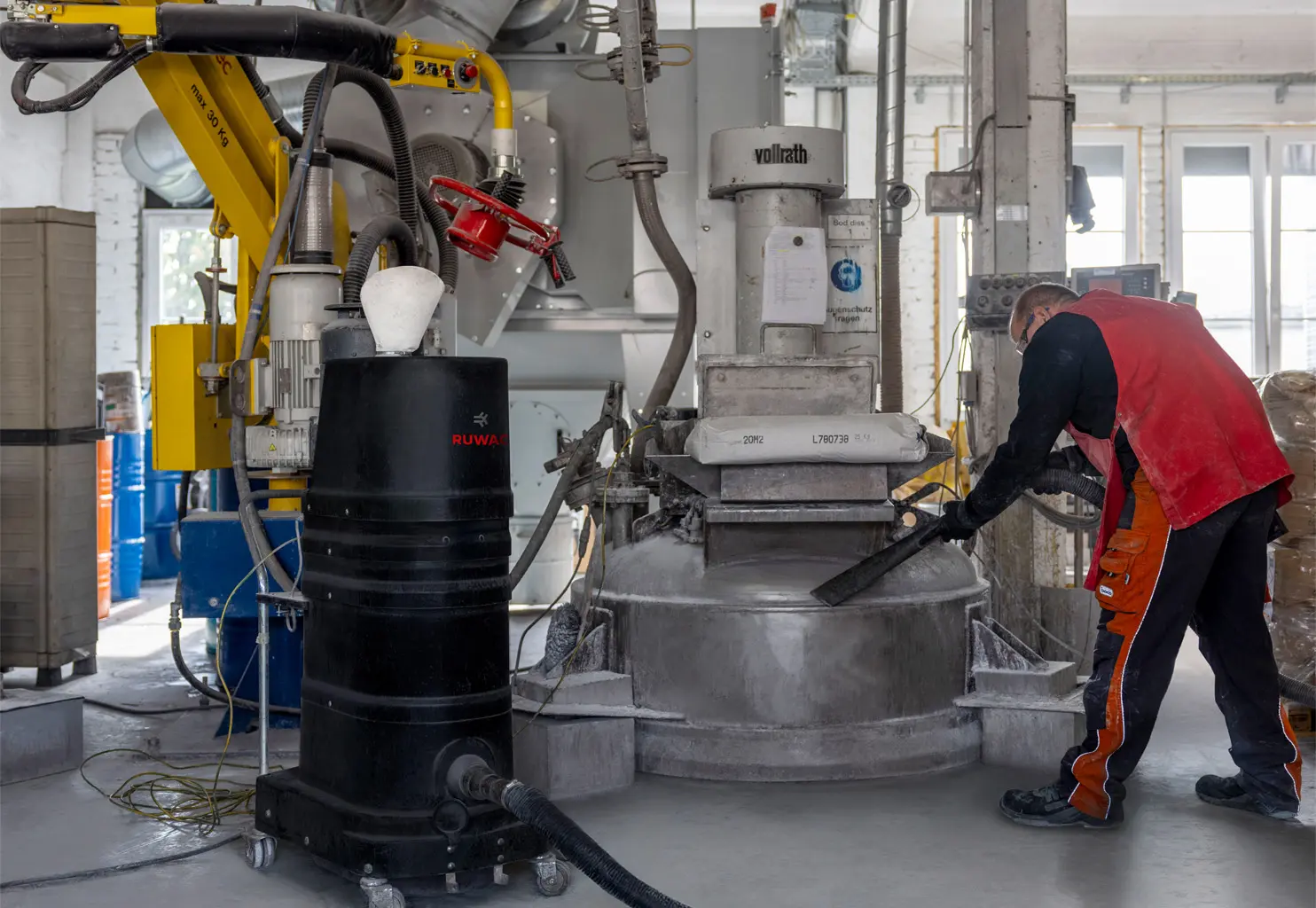
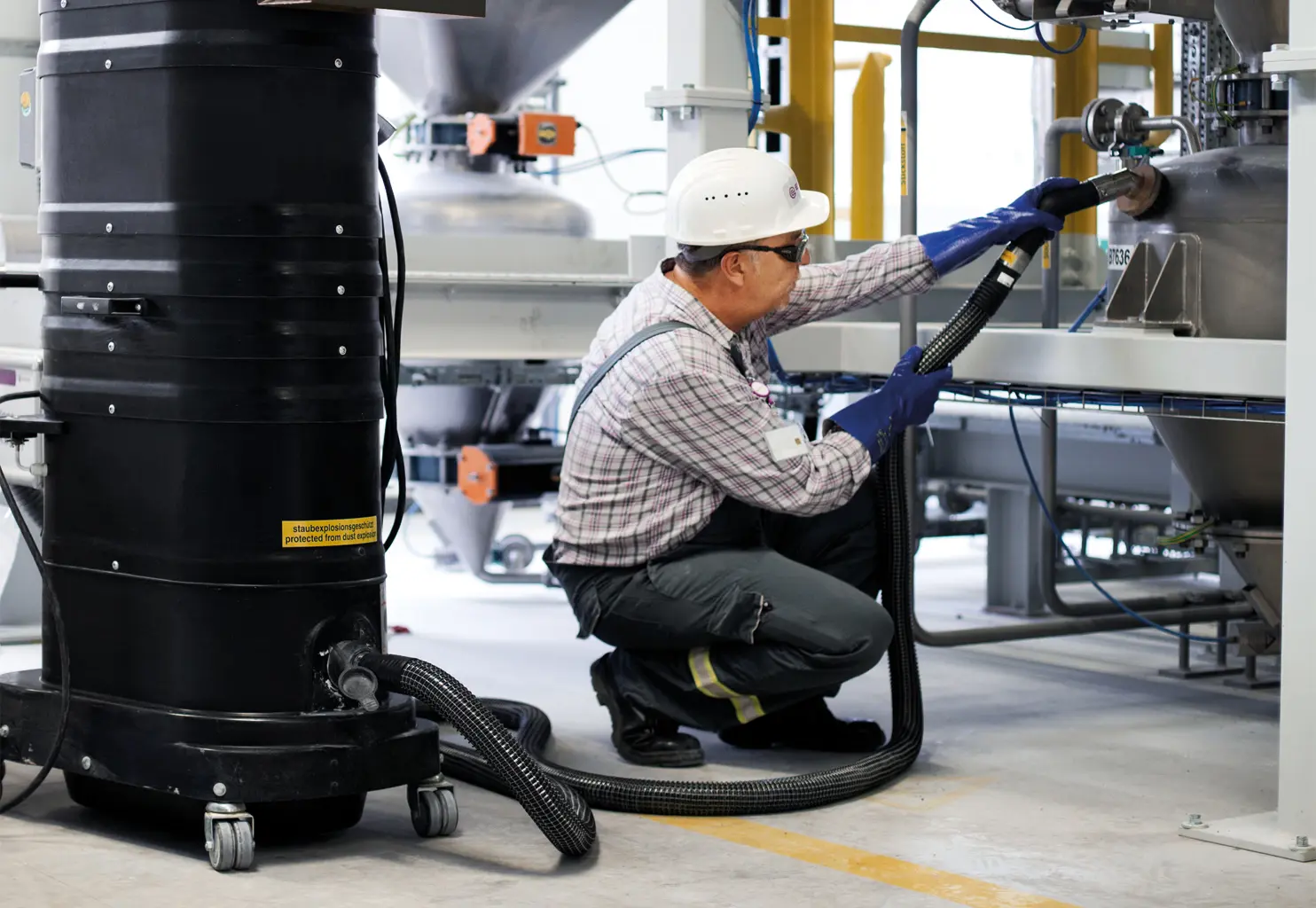
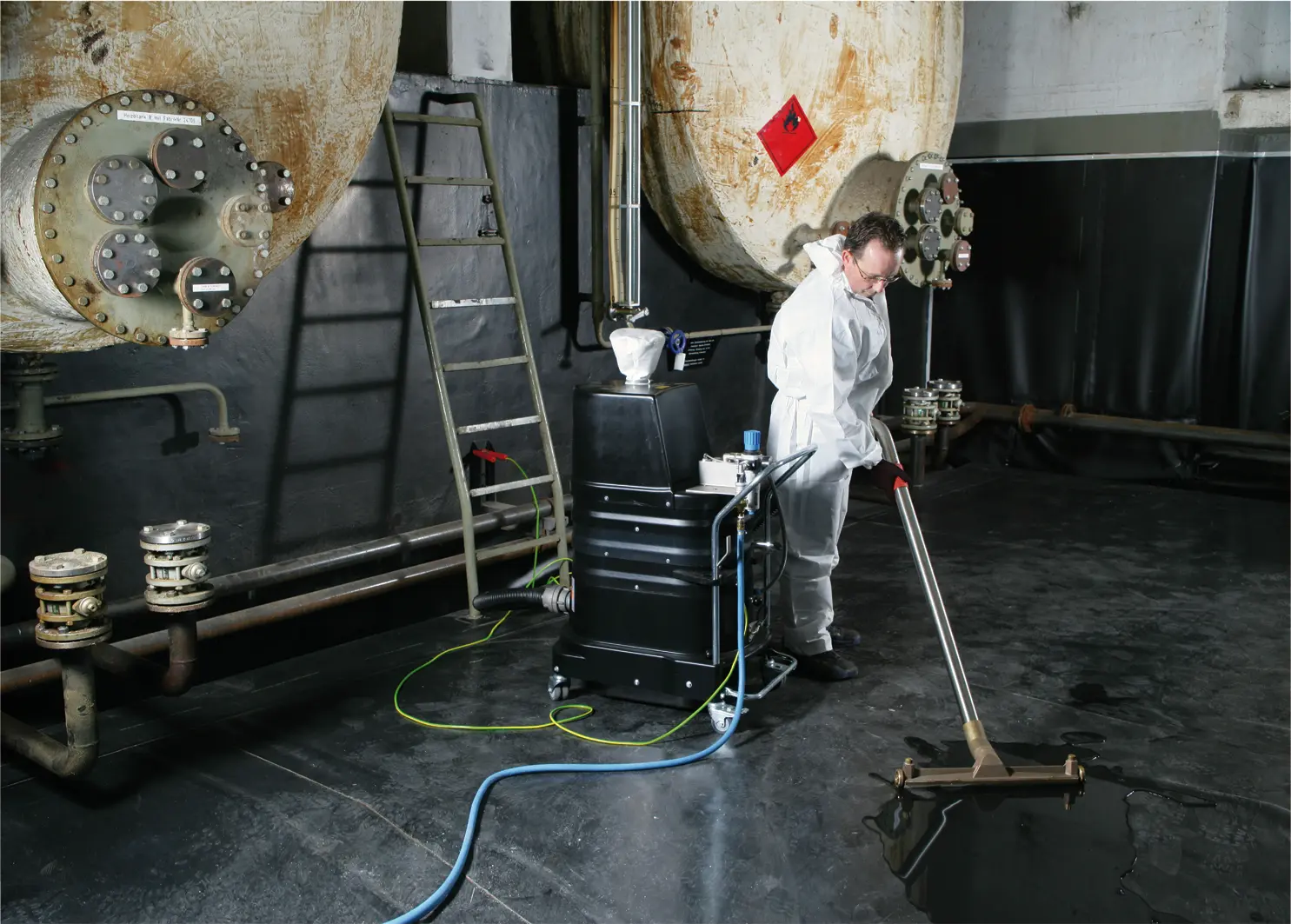
When filling, transferring, or emptying containers, flammable gases and vapors may be released briefly. This often occurs intermittently rather than continuously—precisely when operators are working.
It is crucial that gases are captured immediately or vented in a controlled manner. Solutions must respond reliably even during brief, recurring operations and must not introduce any additional ignition sources.
Cleaning processes are a common cause of EX hazards. Solvents, cleaning agents, or residual vapors come into contact with open equipment, hot surfaces, or electrical components.
Practical solutions ensure that gases are not released uncontrollably. They support safe cleaning without unnecessarily prolonging processes or creating additional hazards.
When a product or formulation is changed, material properties, concentrations, and release patterns change. It is precisely during these transition phases that EX risks arise, risks that were often not a major concern in the original design.
Safe solutions must take these dynamics into account. They must not only be designed for a stable state but must also manage transitions in a controlled manner.
Leaks, incorrect filling, or manual interventions cannot be completely avoided. It is in such situations that safety concepts are put to the test—to see whether they hold up or fail.
Technology for gas-EX-hazard areas must remain predictable even in exceptional cases. It must be robust, transparent, and designed to support people—rather than creating additional uncertainty.
Product concepts for safe processes.
Gas explosion protection poses different challenges than dust EX protection. The risk lies not in visible emissions, but in the invisible atmosphere. The key factors are leak-tightness, controlled flow, safe materials, and a system design that consistently prevents ignition sources. The following product concepts are tailored to typical process situations.
Frequently Asked Questions (FAQ)
Gas explosion protection is required whenever flammable gases, vapors, or mists may be present in significant concentrations. This applies not only to continuous processes but also to temporary conditions such as filling, emptying, cleaning, or malfunctions.
Gases and vapors are invisible, disperse quickly, and can create explosive atmospheres even with small leaks. EX protection requires different design measures, materials, and design principles than dust explosion protection.
No. An ATEX-compliant design variant is a prerequisite, but it does not guarantee process safety. What matters most is proper design tailored to the zone, the medium, the prevention of ignition sources, and actual operating conditions—including maintenance and cleaning.
Process-oriented detection is key. The sooner gases or vapors are controlled, the lower the risk of an explosive atmosphere. Delayed or indirect detection significantly increases the risk.
Yes. EX-protected applications vary greatly depending on the medium, process control, and environment. Standard solutions are rarely sufficient. Safety in these cases is achieved through project-specific design, not through one-size-fits-all approaches.
Jointly assess gas explosion protection.
Gas explosion protection is not a matter of standard solutions, but of understanding the process. The appropriate measures depend on the medium, operating conditions, and actual processes. RUWAC helps you accurately assess gas EX risks and work with you to develop robust protection concepts—transparent, traceable, and practical.