


Powder Recovery & Material Handling
Fabric handling
Powders and fine materials are valuable, sensitive, and difficult to control. Losses do not occur only during disposal, but wherever material escapes uncontrolled, becomes mixed, or is not properly recirculated. Therefore, it is not extraction alone that is crucial, but the controlled management of the material flow throughout the entire process. RUWAC always considers powders in the context of material properties, process steps, and application. This results in solutions that reduce material losses, ensure quality, and maintain economic stability in processes—even under real production conditions.
Powder is lost. Often checked beforehand.
Many problems in powder recovery do not stem from a lack of technology, but rather from incorrect assumptions made in day-to-day operations.
Fabric selection determines the value of the product.
Effective powder recovery does not begin with the vacuum cleaner, but with the process-based handling of the material. The key factor is how powder is generated, transported, separated, and returned to the process—under real operating conditions.
Reliable solutions must prevent losses from the very start. Powder must not be allowed to disperse, settle, or mix uncontrollably; instead, it must be captured in a targeted manner and guided along defined flow paths. Only then can it remain recoverable and of usable quality.
Equally central is separation based on process logic. Pre-separators, filtration, and collection concepts must be designed so that powder is not damaged, compacted, or contaminated. Recirculation must not be a byproduct but an integral part of the system.
Added to this is manageability in day-to-day operations. Material handling only works if it is compatible with changeovers, cleaning steps, and manual interventions. Systems must remain accessible, traceable, and stable—even with changing materials and operating conditions.
Last but not least, long-term cost-effectiveness is crucial. Recovery must not create additional complexity but must simplify processes, reduce scrap, and close material loops.
Powder recovery is not an add-on.
It is the result of a consistently well-thought-out material flow—technically sound, integrated close to the process, and permanently effective.
Fabric handling is learned through practice—not theory.
Powder recovery and controlled material handling are not limited to specific applications. They are relevant wherever valuable, fine, or hard-to-replace materials need to be moved, metered, or recycled within a process.
- In additive manufacturing, the clean recovery of metal or plastic powders determines economic efficiency and process stability. Losses, mixing, or contamination directly affect component quality and costs.
- In the chemical and pharmaceutical industries, powder and material flows arise during dosing, filling, or product changeovers. Here, controlled handling is essential to ensure product purity and enable the reuse of materials.
- In the food and beverage industry, hygiene, product protection, and traceability are paramount. Powders, granules, or additives must be handled with minimal loss without compromising quality or process reliability.
- In plastics and building materials processing, fillers, additives, or mineral powders are generated, and their recovery determines scrap rates, disposal costs, and resource usage.
Industries differ—but the logic remains the same:
value is created only when material stays in the process.
That is why material handling must take effect where it arises: close to the process, tailored to the material, and integrated into the reality of everyday production.
Practice born of necessity.
Powder recovery and material handling do not work as standalone solutions. What matters most is how materials are collected, conveyed, separated, and recycled—under real-world conditions, with varying materials, and during ongoing operations. The following practical examples illustrate typical application scenarios in which requirements can be translated into effective solutions.
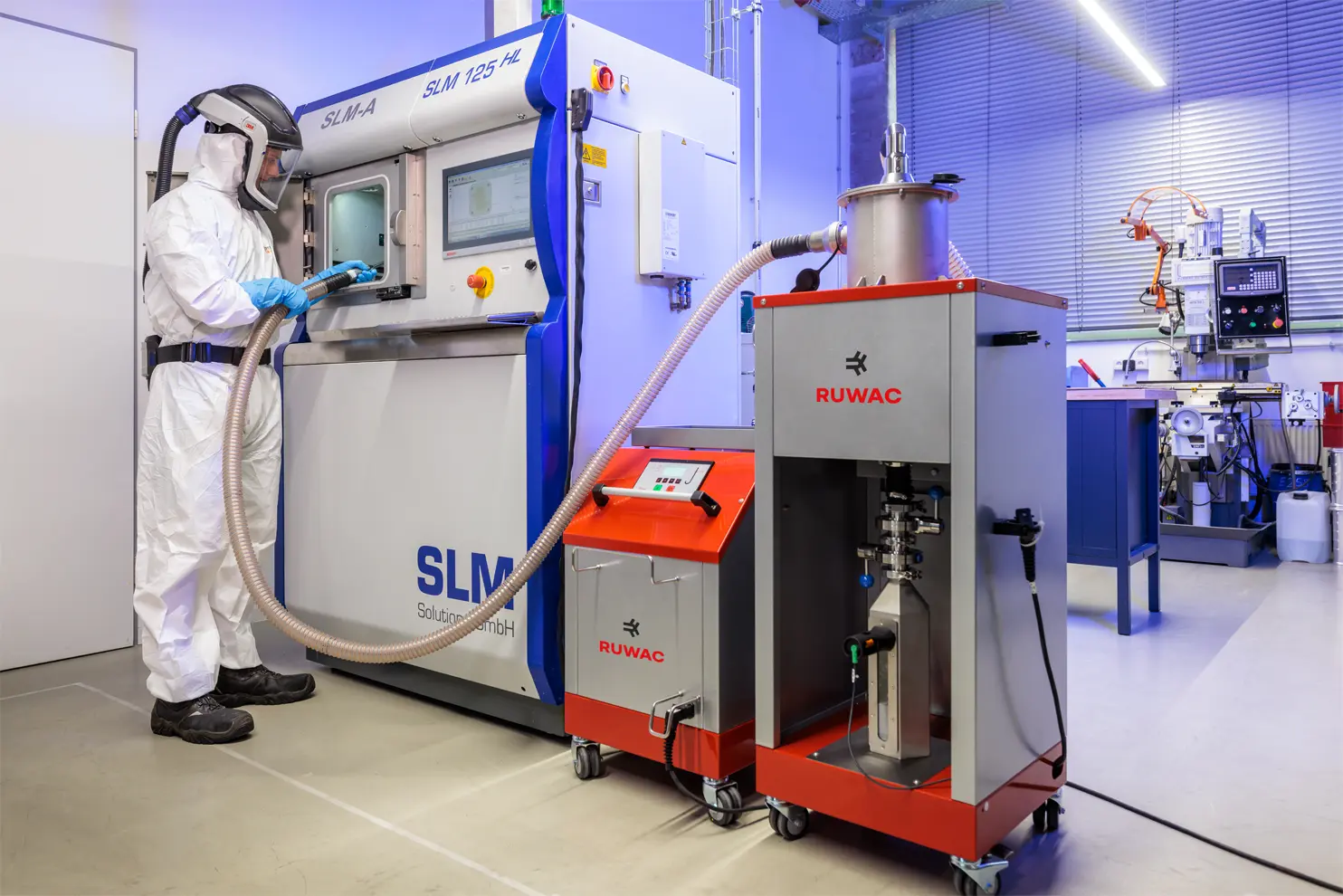
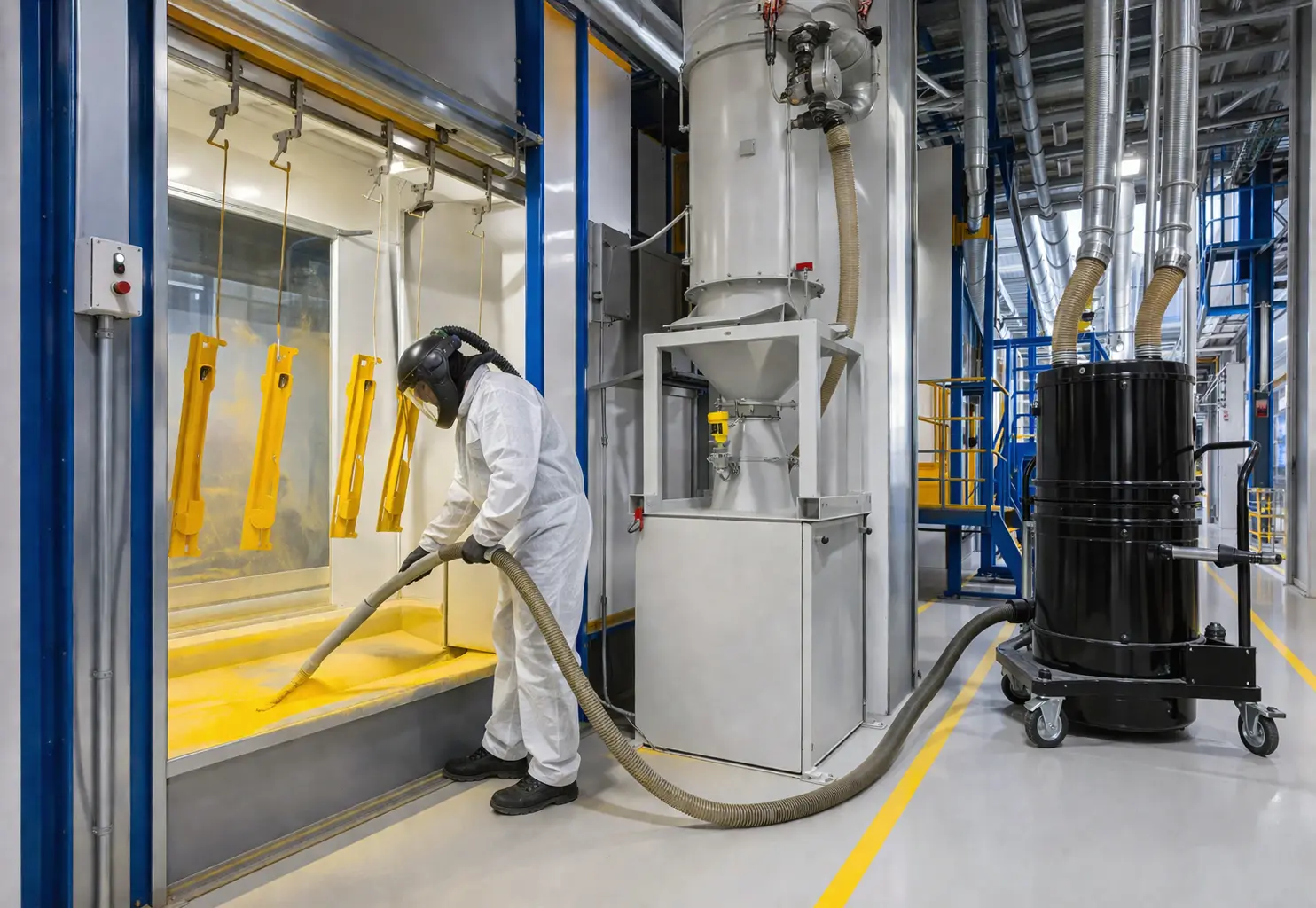
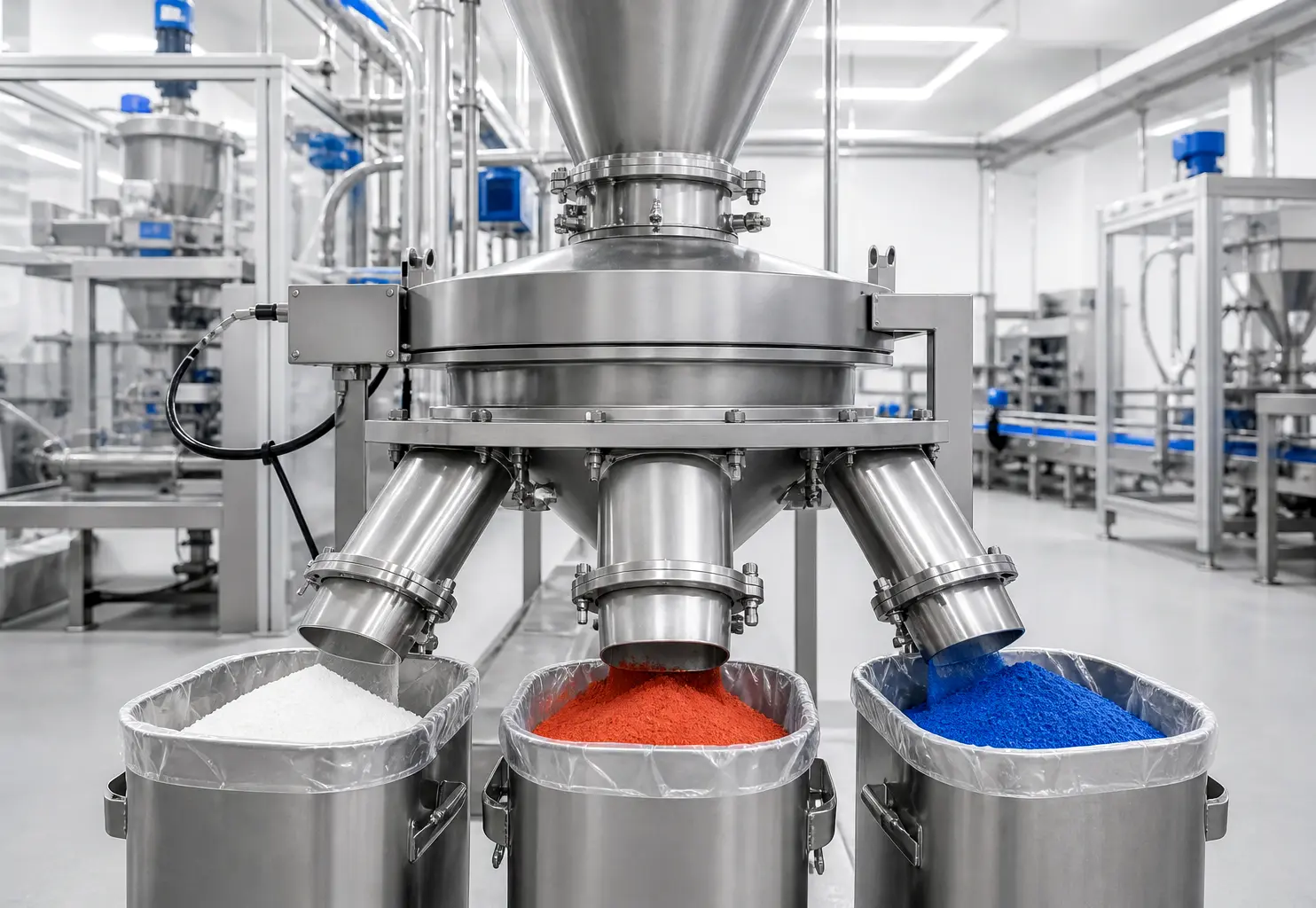
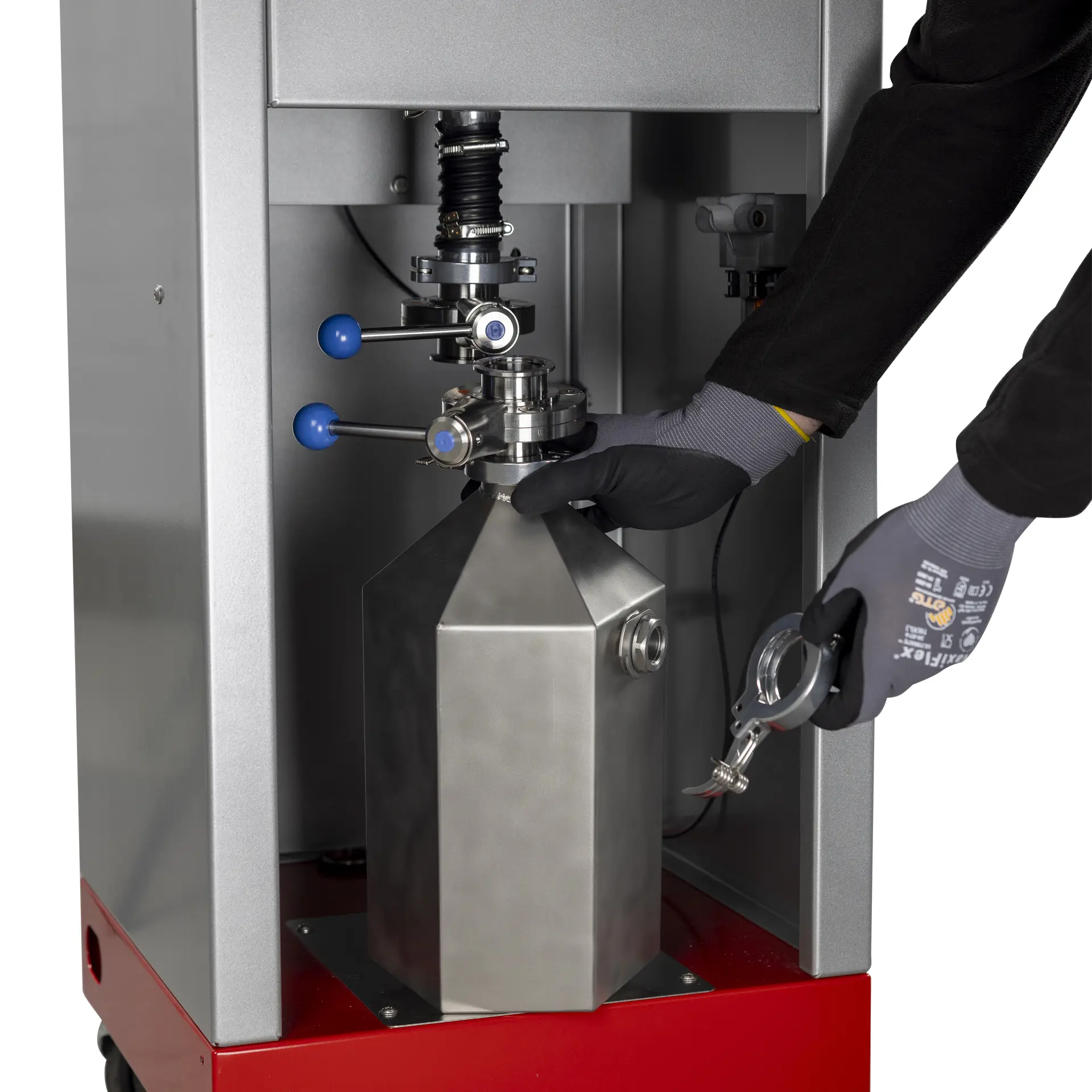
After the actual process, powders often do not remain where they belong: they settle in machines, containers, or work areas. If they are removed in an uncontrolled manner, valuable materials are lost or contaminate other media.
In practice, a process-integrated collection system with a clearly defined material flow has proven effective. Powder is specifically collected, separated, and transferred to suitable collection or recirculation systems. This ensures that material remains usable, the process stays clean, and recovery is reproducible.
Where materials change, the risk of mixing, cross-contamination, and waste increases. Particularly fine powders adhere to surfaces, remain in pipes or filters, and cannot simply be “wiped away.”
Practical solutions rely on clearly separable material paths, easily cleanable components, and defined transfer points. The goal is not maximum performance, but controllable material flow—even when processes are frequently changed.
Powders rarely go through just a single process step. They are conveyed, processed, temporarily stored, or transferred. Without clear guidance, fractions, grades, or batches can mix unnoticed.
In practice, it is clear that early separation is crucial. Pre-separation, defined collection concepts, and clearly structured material pathways prevent media from mixing before they can be processed or recycled in a controlled manner.
Powders are often expensive, sensitive, or available only in limited quantities. Losses do not result from the process itself, but from unclear material handling afterward.
Proven solutions integrate recycling directly into the workflow. Material is not disposed of, but rather collected, inspected, and reintroduced into the process. This creates stable cycles that remain economical, clean, and manageable over the long term.
Product concepts for safe processes.
Dust recovery and material handling present different challenges than traditional extraction tasks. What matters is not the individual piece of equipment, but the interplay between collection, separation, recirculation, and integration into the process. The following product concepts are designed for typical process situations and demonstrate how material flows can be kept under control—even under real-world conditions.
Frequently Asked Questions.
Powder recovery is always worthwhile when materials are valuable, fine-grained, or in limited supply. The key factor is not just the price of the material, but whether the powder can be collected cleanly, separated, and returned in a reproducible quality. Without controlled material handling, recovery quickly becomes a risk to quality and process stability.
Extraction removes material. Material handling maintains control over it.
While simple extraction removes dust from the process, material handling ensures that material is specifically captured, separated, collected, and—where appropriate—reintegrated into the process. The goal is not merely cleanliness, but control over the material flow.
Failure to properly separate powders, fine particles, and impurities risks contamination, mixing, and a loss of quality. Filters become clogged, media become unusable, and recirculation becomes impossible. The consequences include scrap, downtime, and rising disposal costs—often creeping in gradually and not immediately apparent.
This depends on the material, the process, and the quality of separation. Technically, recirculation is often possible, but it makes economic and quality-related sense only if particle size, purity, and condition remain under control. Therefore, it is not the individual device that is decisive, but rather the overall concept comprising detection, pre-separation, and collection.
Standard solutions are usually designed for a single medium. In real-world processes, conditions change: powder becomes wetted, agglomerates form, and fine particles behave differently than expected. Without coordinated pre-separation, suitable filter technology, and well-designed collection systems, performance and control are quickly lost.
Evaluate Powder Recovery and Material Handling Together
Powder recovery is key to cost-effectiveness, quality, and process reliability. The most appropriate solution depends on material value, particle size, process step, and recirculation logic. RUWAC helps you conduct a technically sound analysis of material flows and develop recovery concepts that reduce losses and can be seamlessly integrated into your daily production operations.