


Additive Manufacturing
Reliable.
Reproducible.
Scalable.
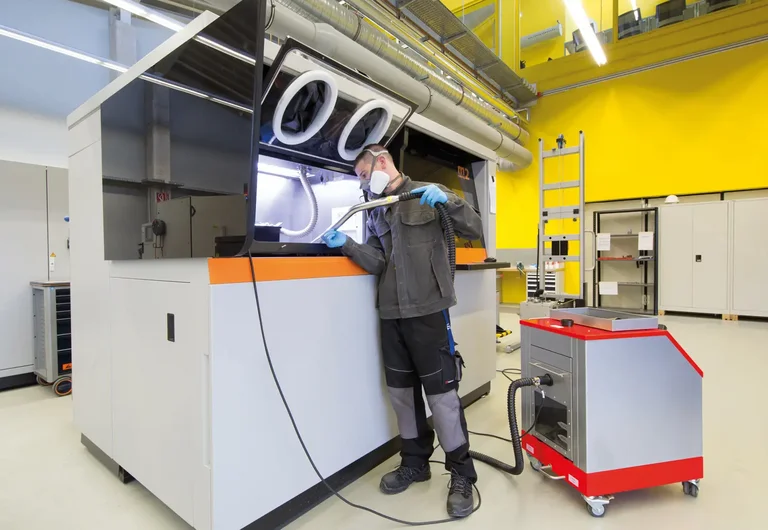
RUWAC specializes in safe and repeatable powder removal in additive manufacturing. Our solutions ensure that build chambers are cleaned in a controlled manner, powder is handled safely, and processes continue to run smoothly—regardless of the material used. Whether metal or plastic printing: We reduce manual intervention, minimize risks to people and equipment, and lay the foundation for cost-effective, scalable AM processes.
Where RUWAC is effective.
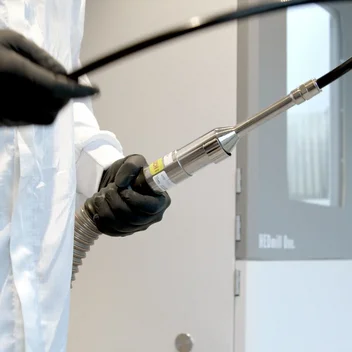
After the build
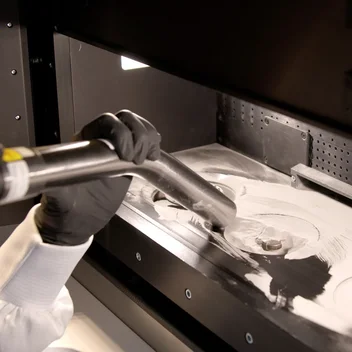
Dust removal from the combustion chamber
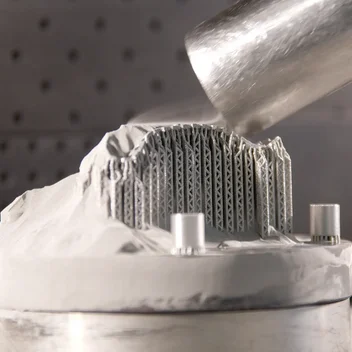
Cleaning of Components & Peripherals
Transition to the next steps in the process
Process reliability after the build.
The success of additive manufacturing depends on the post-build process. RUWAC ensures that powder is removed in a controlled manner, build chambers are thoroughly cleaned, and parts are gently unpacked.
This keeps processes stable, handoffs clean, and risks manageable—regardless of whether metal or plastic powders are used. Manual intervention is reduced, the work environment is protected, and the next process step is reliably prepared.
Reliable rather than improvised
Controlled deburring replaces manual workarounds and ensures consistent processes—even for complex geometries.
Safe for people and equipment
Powder remains within the system. Exposure to fine dust, contamination, and explosive atmospheres are minimized.
Suitable for metal and plastic
Whether reactive metal powders or engineering plastics: the process remains under control and tailored to the material.
Cost-effectiveness that pays off.
Additive manufacturing is only cost-effective if material loss is kept under control. RUWAC enables the targeted recovery of powder immediately after the printing process—cleanly separated, reusable, and free of contamination.
Get more value out of every construction project
The powder remains in the system and is not lost.
Reduce costs without increasing risks
Cost-effectiveness comes from control—not from compromising on safety.
Scalable for mass production processes
Particularly effective when construction job numbers are rising and production is steady.
ROI Calculator
What is the financial impact of powder recovery? With just a few inputs, you can get a realistic estimate of your potential savings — as a practical starting point for your individual consultation.
When it comes to plastic powders, the focus is less on the material itself and more on process stability, cleanliness, and occupational safety.
Estimated savings potential
This calculation is for reference only. Actual cost-effectiveness depends on the material, process, and system configuration.
Assess savings potential togetherWith your personal RUWAC contact person.
Frequently Asked Questions.
RUWAC solutions are designed for powder handling in additive manufacturing using metal and plastic-based powders. The process remains controlled and reproducible—regardless of whether reactive metal powders or engineering plastics are being used. What matters is not the material itself, but the reliable guidance of the powder within the system.
After the manufacturing process, RUWAC ensures controlled dust removal from the manufacturing chamber and components. Dust is removed in a targeted manner, remains within the system, and does not escape uncontrolled into the environment. This reduces the need for manual intervention, stabilizes handoffs, and reliably prepares the system for the next process step.
Yes. With the right accessories and tailored extraction technology, even narrow channels, delicate structures, and complex support geometries can be reliably deburred. The component is not subjected to mechanical stress during this process, which improves quality and reduces scrap.
Cost-effectiveness depends on several factors, particularly the cost of materials, the amount of powder used per build, and the number of builds. In metal additive manufacturing, recovering expensive powders can quickly pay off. The ROI calculator integrated into the page provides a realistic estimate of this.
RUWAC systems are designed for use in safety-critical environments. Depending on the application, ATEX-compliant design variants, appropriate dust classes, and measures to reduce exposure to fine dust are available. The goal is to protect people, equipment, and processes equally.
Security. From the ground up.
Additive manufacturing places high demands on the safe handling of powders. RUWAC therefore considers safety to be an integral part of the powder removal process—technically sophisticated, designed to meet standards, and tailored to real-world applications. Powder is guided in a controlled manner, manual intervention is reduced, and risks to both personnel and equipment are minimized. This results in stable processes that can be reliably integrated into industrial environments—regardless of whether metal or plastic powders are being used.

Technical Safety
RUWAC systems are designed for use in safety-critical environments. Depending on the application, design variants are available for different dust classes, as well as ATEX-compliant solutions. Powder remains within the system and does not escape uncontrolled into the surrounding area.

Standards & Regulations
The design of the systems complies with applicable standards and guidelines, such as those governing explosion protection, occupational safety, and the Machinery Directive. This ensures that RUWAC solutions can be safely integrated even in regulated production environments.
Responsibility for People and Processes
Reducing manual intervention lowers employees' exposure to fine dust. At the same time, equipment is protected and downstream processes are stabilized. Safety thus becomes the foundation of reproducible additive manufacturing.
Investment security
Safety requirements are constantly evolving. RUWAC systems are designed to adapt to these changing requirements—through modular designs, upgradeable design variants, and long-term serviceability.
Strong in the details.
Upstream. And effective.
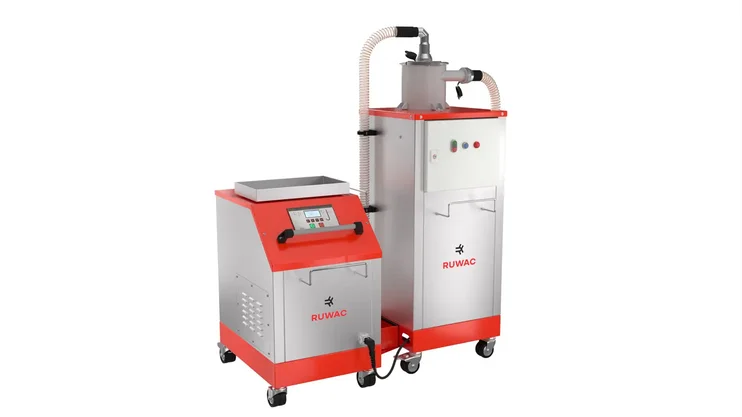
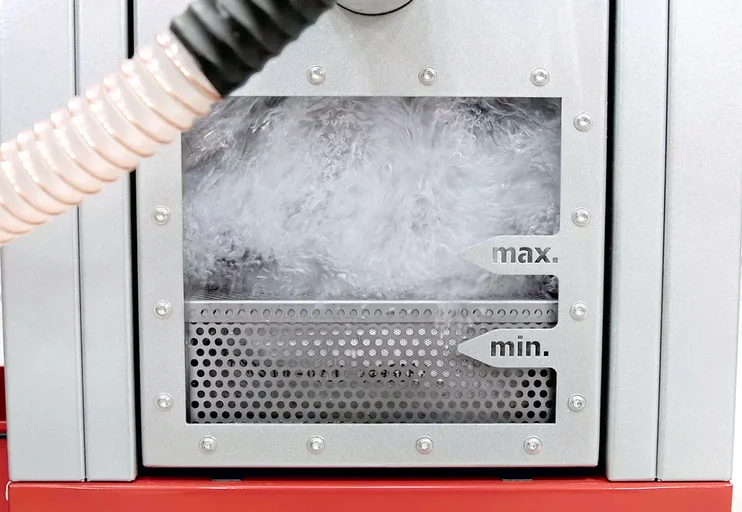
The dry pre-separator separates powder before it reaches the main extraction system. This reduces the load on the main separator, extends filter life, and ensures that the extracted material is collected cleanly. Especially in additive manufacturing, where large amounts of powder are used, this creates a stable, controllable process—from the first build job through to series production.
Powder follows the laws of physics. Not chance.
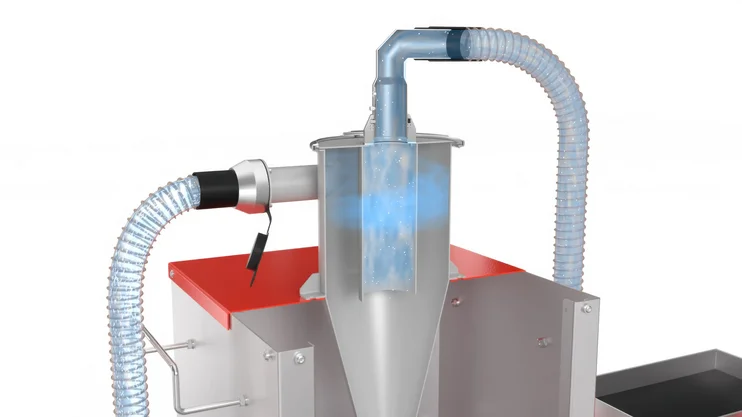
A cyclone uses airflow and centrifugal force to reliably separate powder from the airstream. Fine particles remain under control, and buildup is reduced. The result: clean separation, reproducible recovery, and a process that operates independently of manual expertise.
Confidently executed. Masterfully controlled.
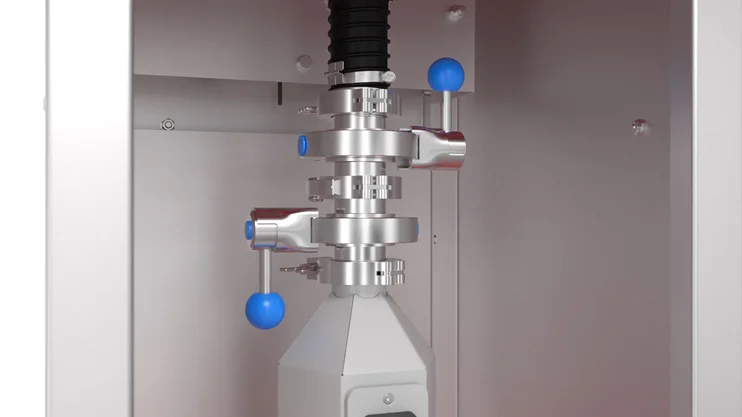
Powder stays where it belongs: inside the system. Sealed transitions, secure connections, and defined interfaces prevent material from escaping uncontrollably. This reduces exposure to fine dust, protects the work environment, and ensures clean transfers to subsequent process steps.
Take control before things get critical.
Levels, connections, and equipotential bonding are not minor details, but rather integral to process reliability. Integrated monitoring and grounding systems enable early detection of when action is required. This ensures that operations remain predictable—even with varying materials and batch sizes.
When concepts become part of everyday life.
Additive manufacturing places high demands on safety, cleanliness, and process stability. The following examples demonstrate how these requirements can be reliably met in everyday industrial operations—for both metal and plastic applications.
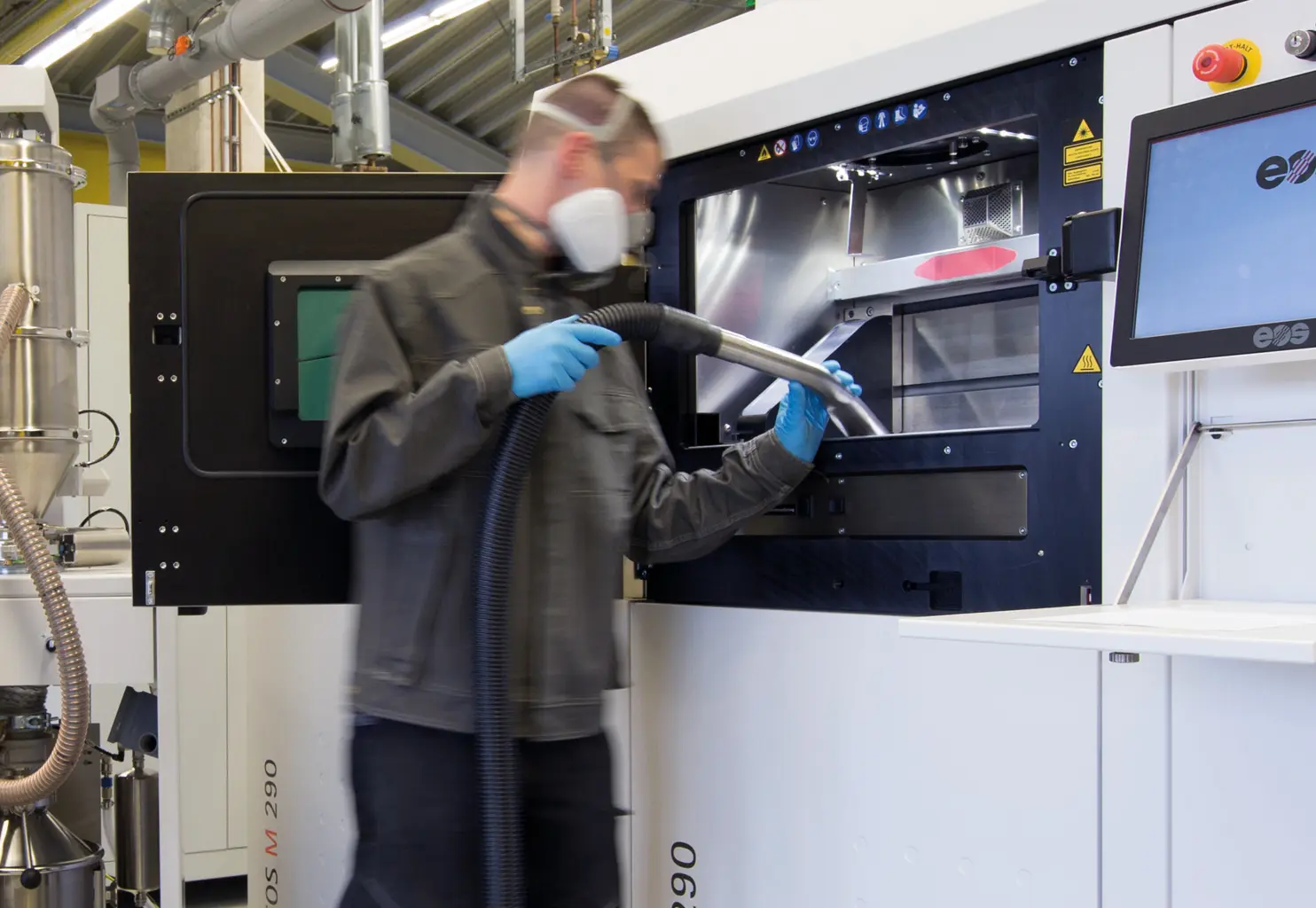
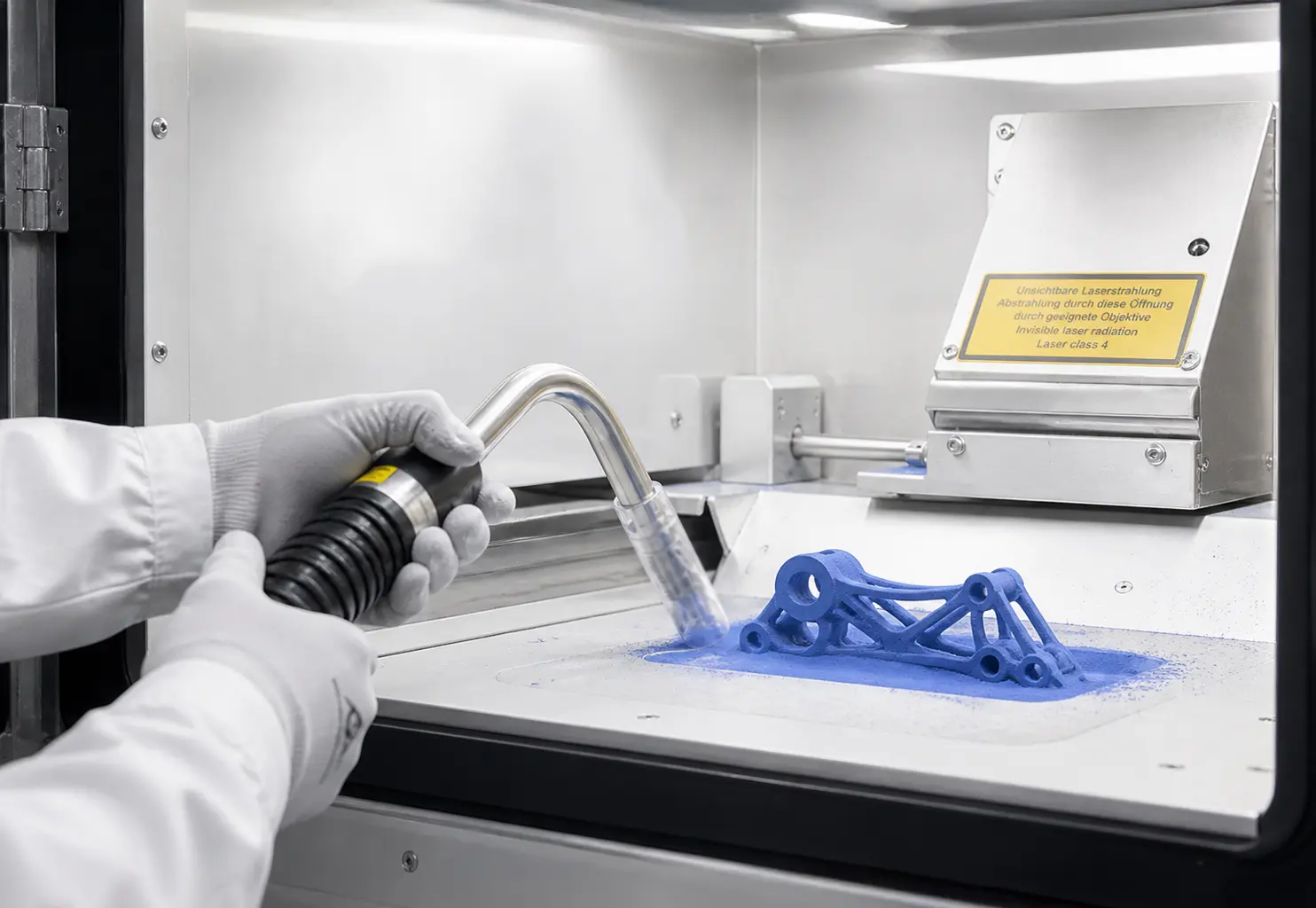
Dust Removal and Safe Further Processing
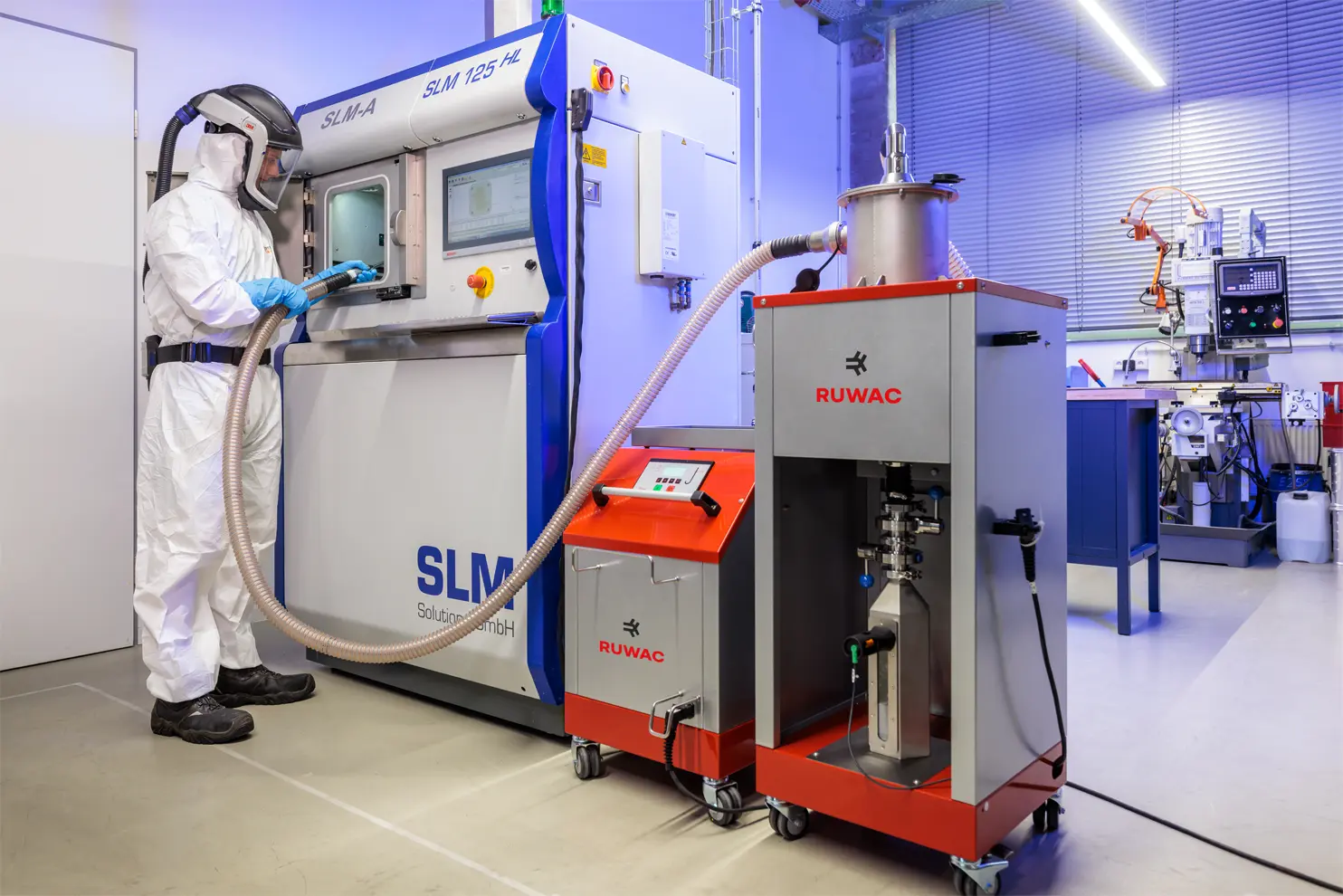
After each build process, excess metal powder is removed from the system’s working chamber for processing and reuse. RUWAC solutions ensure that this powder is extracted in a controlled manner and safely captured.
The air stream is first directed into a collection tank filled with liquid. The powder binds, sinks, and is reliably removed from the process. The remaining air is cleaned through dust class H filters. This keeps the build chamber clean, the powder usable, and the process safely controlled.
Reference: voestalpine
Work cleanly – keep materials separate
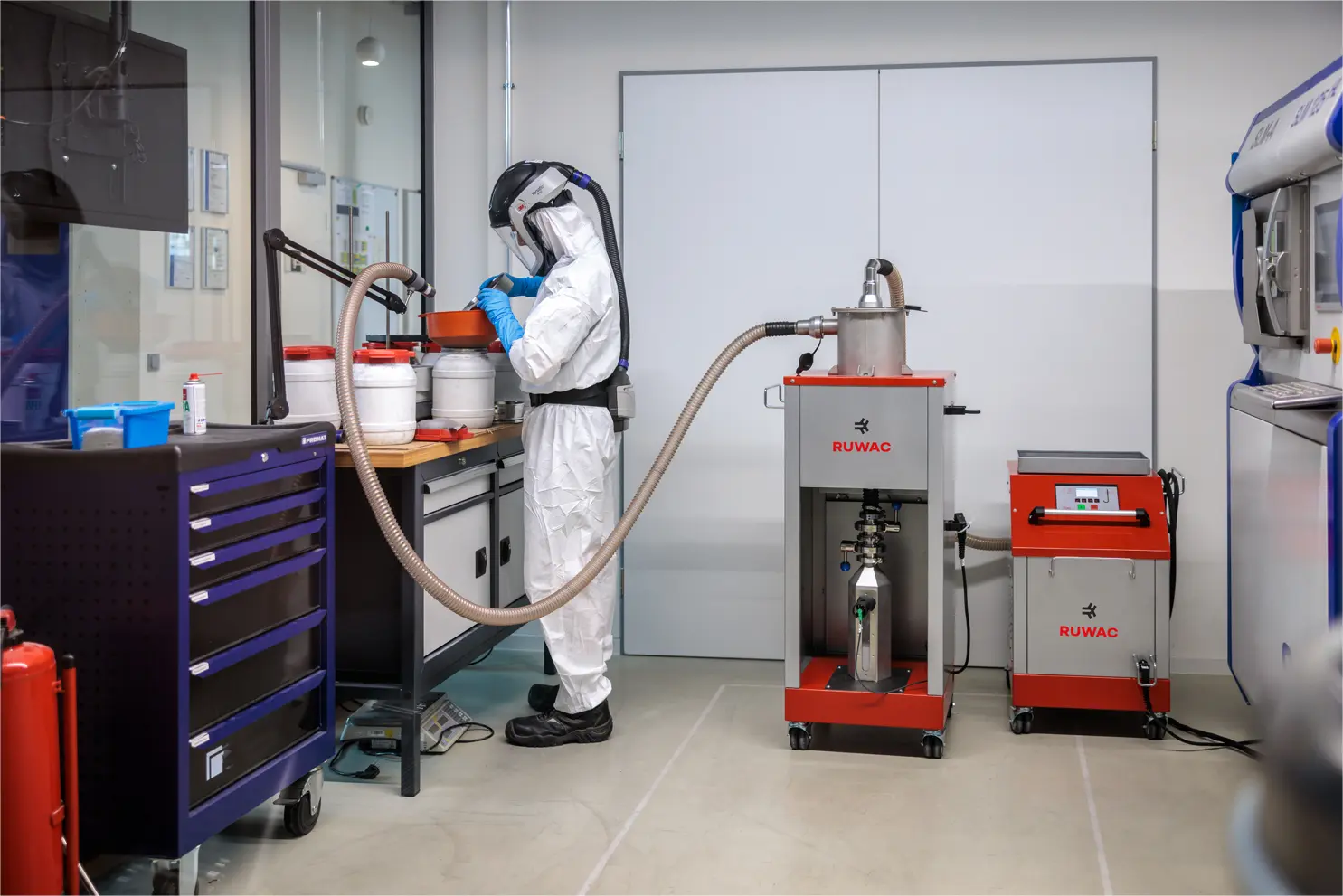
Filling the material supply generates fine dust that must not be inhaled or mixed. RUWAC supports this step with targeted extraction directly at the transfer point.
Excess dust is collected, while the pure powder remains intact. Coordinated nozzles and accessories are available for the subsequent cleaning of the workspace. This keeps the entire process clean, reproducible, and efficient—without additional manual rework.
Reference: Realizer
Reduce risks. Stabilize processes.
After the printing process, conductive metal powders remain in the build chamber. These residues must be completely removed to avoid risks to people and equipment.
RUWAC systems direct the airflow through a liquid-filled collection tank. Particles settle as sediment, while the surrounding area remains protected. An integrated equipotential bonding system ensures that no dangerous charges build up. The process remains under control—even with challenging materials.
Reproducibility Instead of Improvisation
A medium-sized company uses additive manufacturing with plastic powders to produce functional components in small and medium-sized production runs. After each build process, the build chamber and components must be reliably depowdered without polluting the surrounding environment.
With a customized RUWAC solution, powder residues are extracted in a controlled manner and guided through the system. Manual cleaning work is largely eliminated, and dust exposure at the workplace is significantly reduced. The powder removal process becomes reproducible—regardless of the operator. This transforms an experimental manufacturing step into a stable production process.
The right RUWAC systems for your processes.
Modularly combined – precisely tailored to each process step.
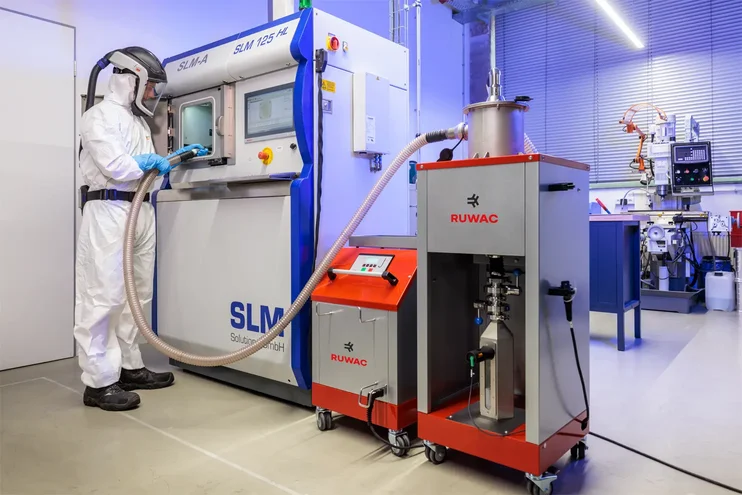
Dust Removal and Powder Recovery
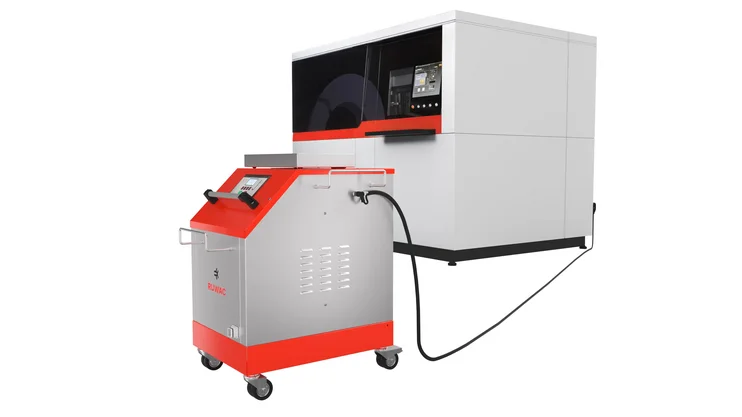
Modular systems are used for controlled powder removal after the build, reliably separating the powder and preparing it for reuse. Dry pre-separators such as the R26 separate large quantities of powder at an early stage, reducing the load on downstream systems and laying the foundation for cost-effective processes—particularly in metal AM.
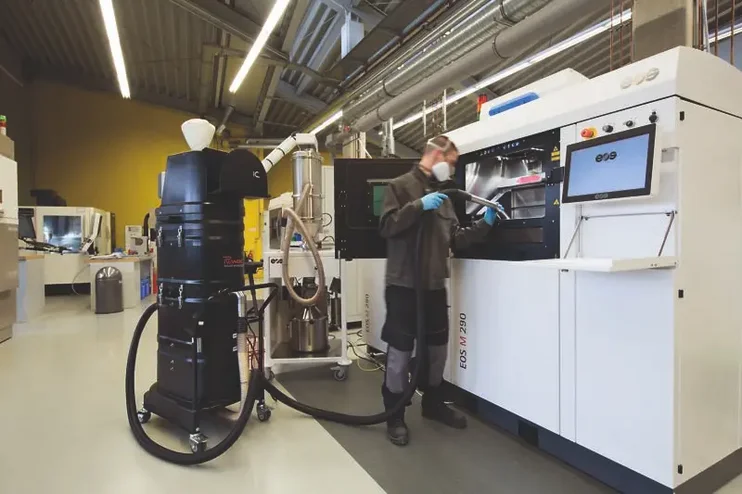
Cleaning of construction chambers and facilities
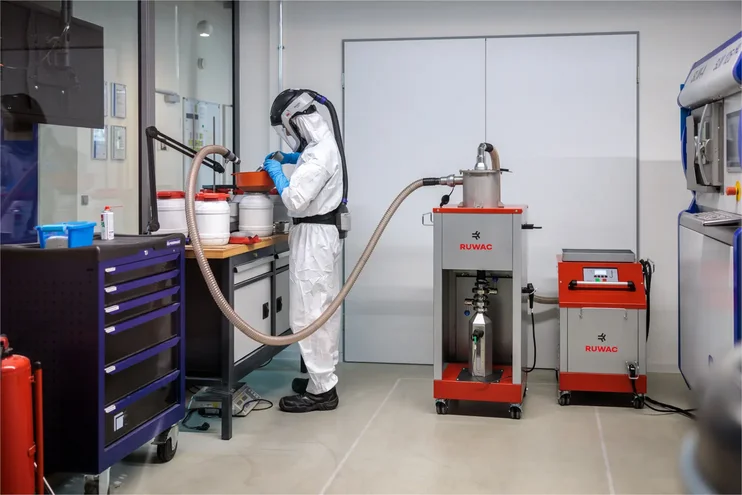
Reliable cleaning of work chambers is essential for reproducible results. Mobile industrial vacuum cleaners handle this step in a controlled manner that is appropriate for the materials involved. Depending on the requirements, design variants are available for different dust classes, materials, and safety requirements.
Powder Handling and Dosing
When transferring, dosing, or filling material supplies, fine dust is generated that must be effectively captured. RUWAC systems support these processes with precise extraction, tailored accessories, and safe powder handling—without mixing or contaminating the material.
Safety-critical applications
Specially designed systems are available for handling conductive, reactive, or explosive powders. These include design variants for various dust classes as well as ATEX-compliant solutions. The goal is to minimize risks and ensure safe operation even under demanding conditions.
Thinking Ahead Safely in Additive Manufacturing.
Let's talk about your depowdering process.
Together, we evaluate safety, cost-effectiveness, and integration—tailored to the material, equipment, and production volume.