

Metal chips and coolant: an inevitable combination
In machining—whether turning, milling, grinding, or drilling—metal chips are produced continuously and in significant quantities. At the same time, coolants and cutting oils are an integral part of the process: they cool, lubricate, and carry heat away from the machining zone.
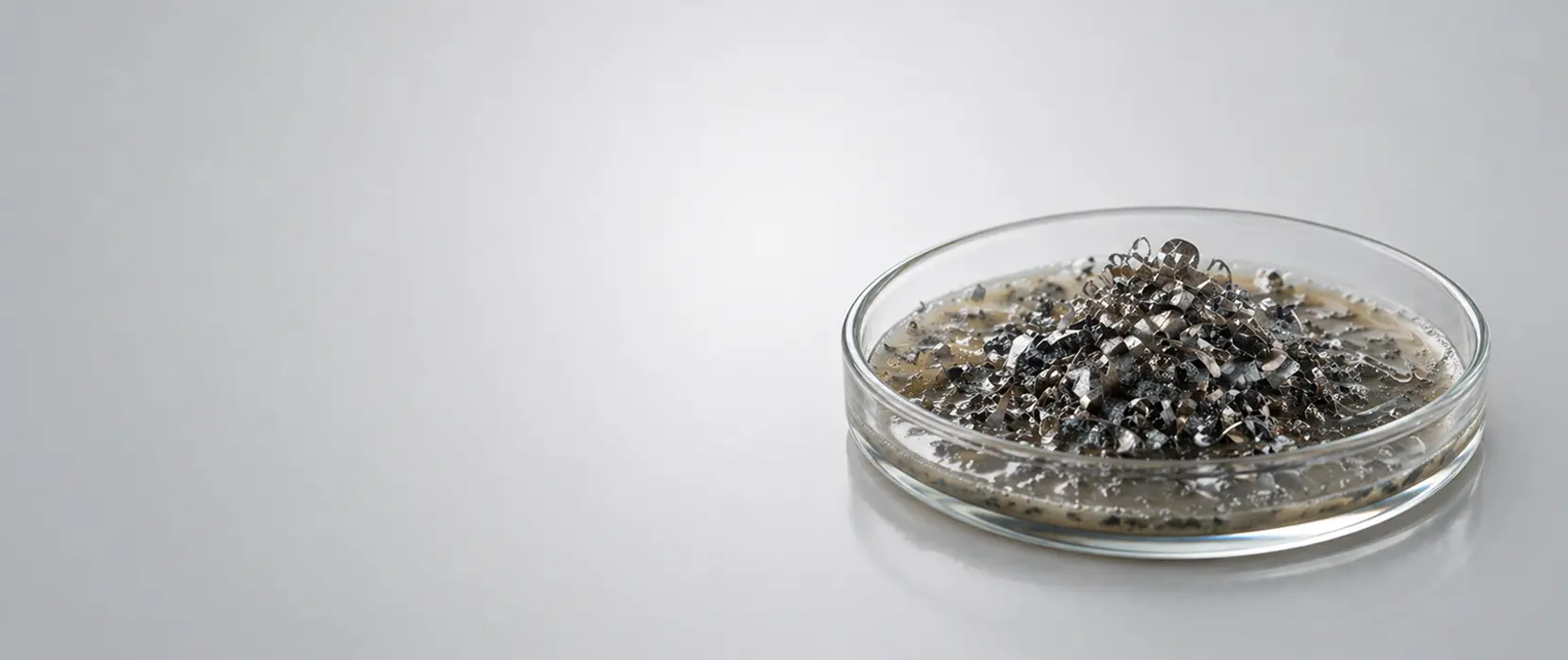
The result is a mixture of solid and liquid components that spreads throughout the machine’s entire working area. Anyone who simply extracts this mixture without separating the fractions faces two problems: The chips are contaminated with liquid and lose their recycling value. And the coolant is interspersed with fine particles and cannot be directly treated or reused.
In practice, it becomes clear that the real challenge lies not in extraction, but in controlled separation.
How chip vacuums achieve separation
Chip vacuums are designed precisely for this task. The material being extracted—the mixture of chips and liquid—is immediately separated upon entering the system.
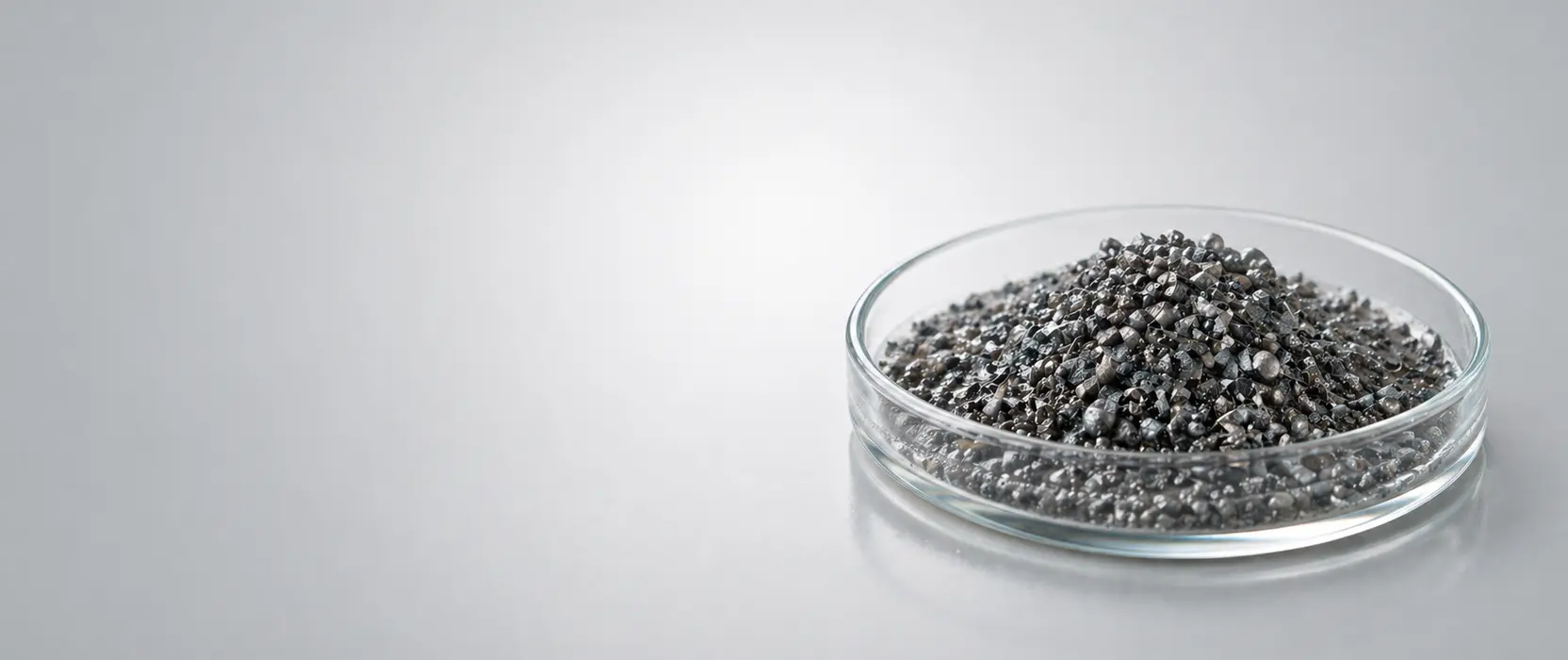
The solid components are collected in a basket. After removal, they can be recycled as a secondary raw material. The recycling value is preserved because there is no mixing with other materials and the liquid component has been specifically separated.
The liquid component is directed into a separate collection tank. Emptying is accomplished either by gravity or via an integrated pump. Depending on the design variant, this can operate either simultaneously with the suction process or with a time delay. The components remaining in the air stream are additionally filtered before the air is released back into the environment.
The result: Both fractions are cleanly separated, and both remain usable—the cooling lubricant for treatment or disposal, the chips for recycling.
When this principle is particularly relevant
Not every application places the same demands on a chip vacuum. The decisive factors are the type of chips, the liquid content in the mixture, and the intensity of operation.
With large volumes of chips and a low liquid content—such as during milling—the main challenge lies in the system’s collection capacity and robustness. With heavy chips, such as those produced during turning, the suction power and mechanical resilience of the separation elements are crucial.
At machining centers operating continuously, an additional requirement arises: The vacuum cleaner must be able to operate continuously without the fluid extraction interrupting the suction process. This is where systems with pump-off control come into play. The fluid is discharged either simultaneously or with a time delay, while the extraction process continues uninterrupted
What this principle demonstrates
Chip vacuums are often viewed as cleaning devices. In practice, however, they fulfill a different function: they are tools for controlled material flow separation during the ongoing manufacturing process.
The key difference lies in perspective. Those who view chips and coolant as waste organize cleaning. Those who view them as secondary raw materials and recoverable resources organize material separation—and retain the value of both fractions.
In machining, this distinction determines recycling rates, disposal costs, and the ability to return coolant to the process.
Classification
In such applications, it becomes clear that the choice of extraction system is not merely a technical decision, but a process-economic one. Which system makes sense depends on the type of chips, the liquid content, the operating mode, and the desired material and disposal concept.
RUWAC develops chip vacuums for these requirements in various performance classes—from mobile use to continuous operation at machining centers with integrated pump-off control. The decisive factor here is not only the suction capacity but also the system’s ability to separate material flows in a controlled manner within the process.