


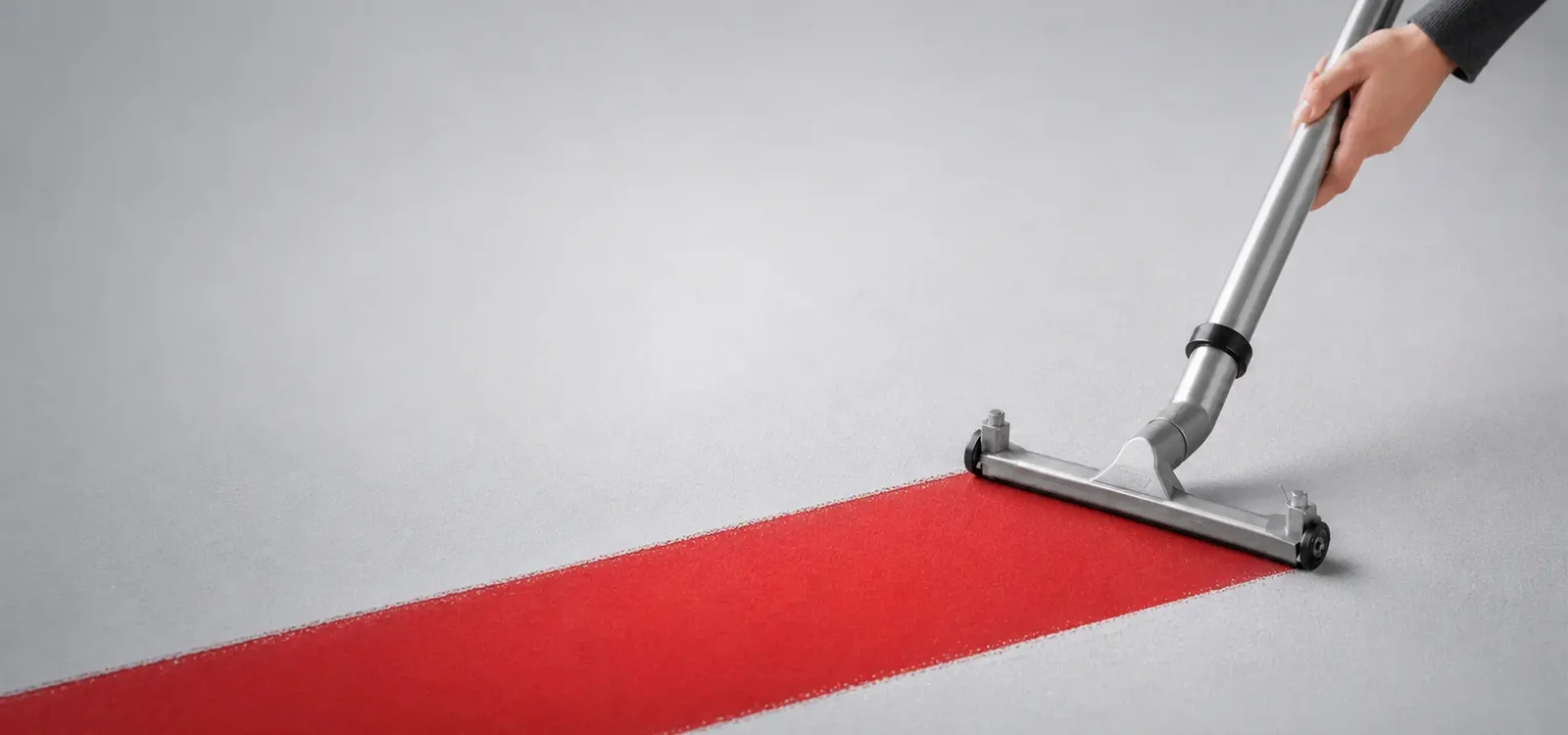
Cleaning changes conditions—not just surfaces.
Classification
Cleaning is often seen as a secondary task—something that happens after the main process.
In reality, cleaning is an active intervention:
- in material states
- in atmospheres
- in deposits
- in safety assumptions
Cleaning changes processes. And creates its own risks.
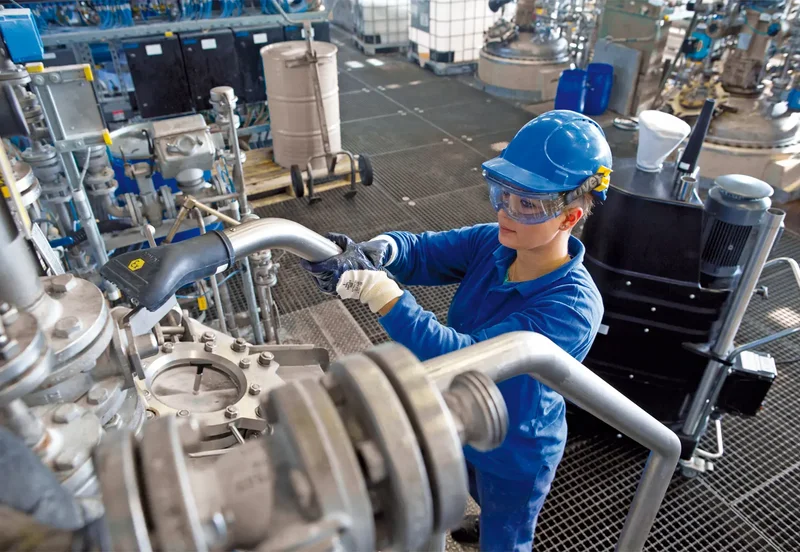
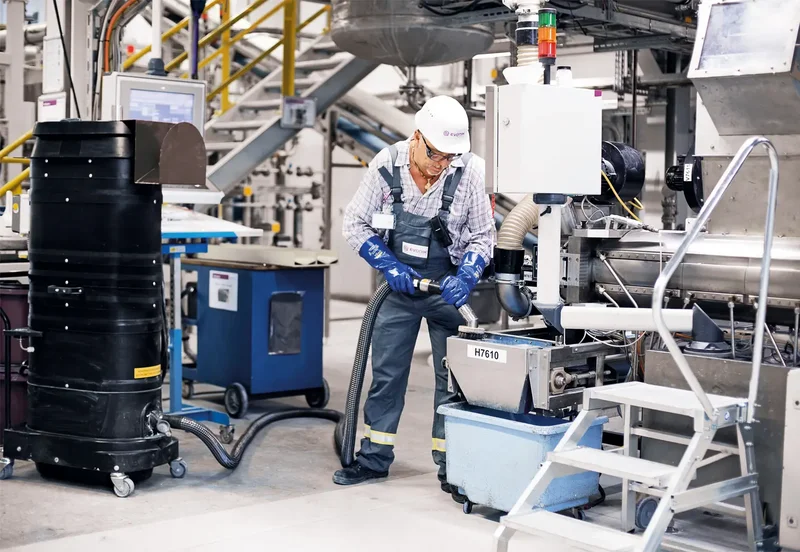
Where cleaning is effective—and critical
Cleaning steps in where processes reach their limits:
- with dust deposits
- powder residues
- with chips and media
- in the event of leaks
- during product changes
- during shutdowns and restarts
What appears stable during operation becomes mobile during cleaning.
Common misconceptions
Cleaning rarely fails because of a lack of motivation. It fails because of false assumptions.
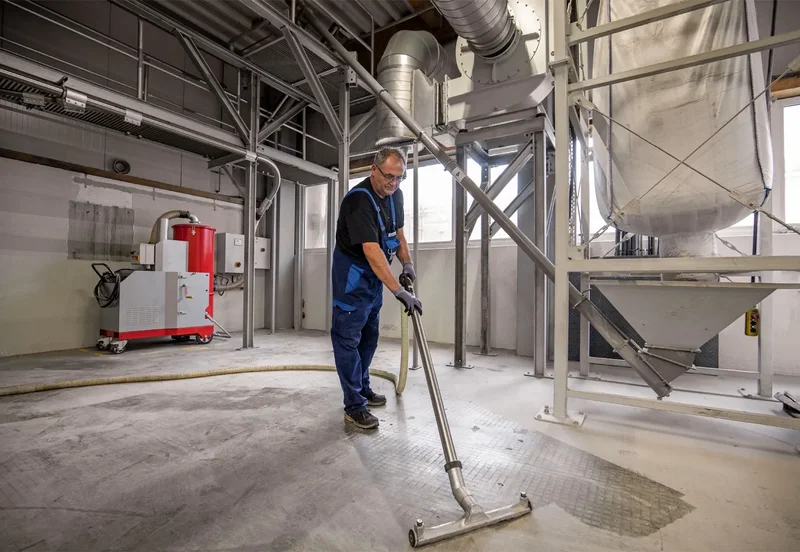
Requirements for safe cleaning
Effective cleaning must be approached from a process perspective. It must:
- Control and capture emissions, not stir them up
- Remove deposits in a targeted manner, not spread them
- Separate substances, not mix them
- Stabilize conditions before restart
- remain reliably reproducible even under time pressure
Cleaning is not an emergency. It is a recurring process step.
Industries where cleaning is critical to safety
Cleaning is essential wherever substances are involved:
- Chemicals & Pharmaceuticals – product changeovers, active ingredient residues
- Additive manufacturing – powder deposits
- Food – organic dust, hygiene
- Metalworking – chips, cooling lubricants
- Building materials – mineral deposits
What they have in common is not the material, but the moment of cleaning.
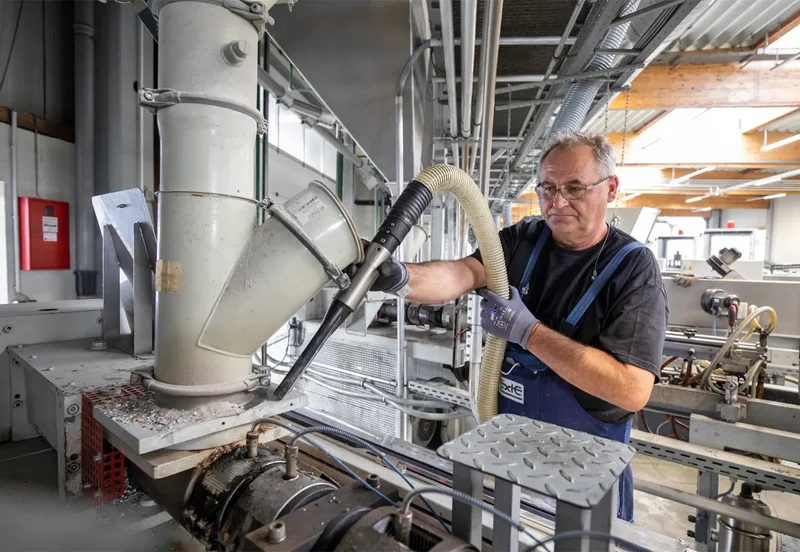
Cleaning affects the restart
Many incidents don't happen during work. They happen afterward.
During a restart, loosened deposits, changed atmospheric conditions, or new operating conditions come into play. Cleaning determines whether processes start in a controlled manner—or with residual contamination.