


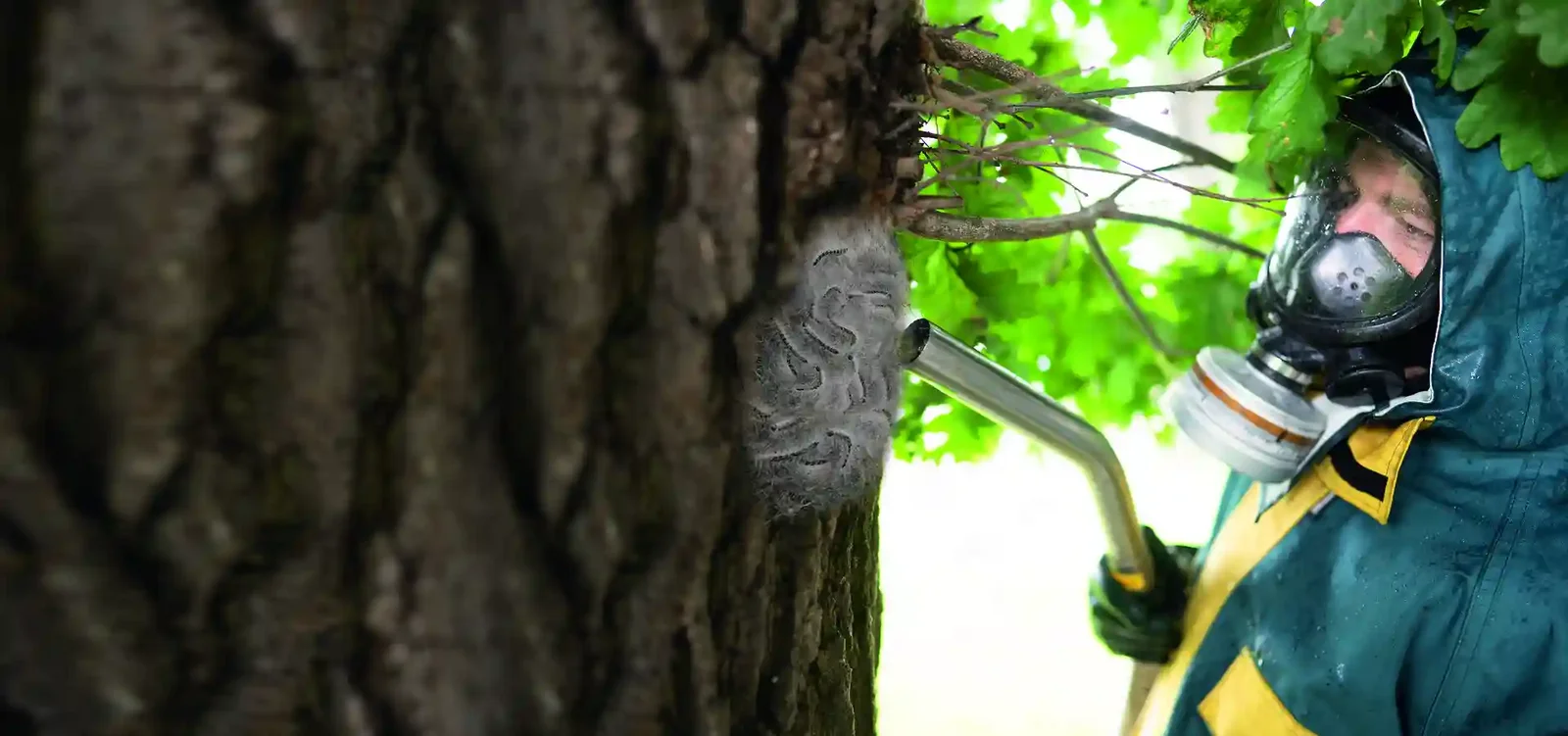
Safely vacuum up oak processionary moths.
The oak processionary moth appears in many regions every year between spring and summer and poses a significant health risk. The caterpillars’ fine stinging hairs contain a stinging toxin and can cause skin irritation, breathing difficulties, or allergic reactions upon contact. When controlling the infestation, the nests must not simply be knocked down or brushed away, as this can cause the stinging hairs to spread into the surrounding area. In practice, the caterpillars and webs are therefore often vacuumed up directly to remove them safely and prevent the hairs from spreading. Municipalities, public works departments, as well as tree care, landscaping, and pest control companies use powerful industrial vacuum cleaners for this purpose.
Why the oak processionary moth is dangerous
The oak processionary moth is a moth whose caterpillars primarily infest oak trees. Starting in the spring, the caterpillars form large, web-like nests on trunks and branches.
The caterpillars have thousands of microscopic stinging hairs. These hairs can easily break off and be spread by wind or mechanical contact. Even small amounts can trigger severe skin and respiratory reactions in humans.
Particularly affected are:
- public green spaces and parks
- schoolyards and playgrounds
- Street trees along roadways
- Forest edges and recreational areas
Typical clients
Why removing nests requires special precautions
The caterpillars' stinging hairs contain the toxin thaumetopoein. If they come into contact with the skin or respiratory tract, they can cause allergic reactions, skin rashes, and breathing difficulties.
Mechanical removal or knocking down of the nests can release large quantities of these hairs. This increases the risk for employees, residents, and passersby.
For this reason, many municipalities and landscaping companies control the population by carefully vacuuming the nests. This prevents the stinging hairs from being stirred up and spreading into the surrounding area.
For tree care and pest control companies, this method is now one of the established procedures for combating the European spindle tree.
Safe removal requires:
- enclosed collection of the nests
- controlled suction of the stinging hairs
- Prevention of dust from being stirred up
Technical Requirements for the Extraction of EPS Nests
Equipment used to remove oak processionary moths must be designed so that caterpillars, nests, and stinging hairs can be safely collected.
Key requirements include:
- powerful suction for nests and webs
- reliable filtration technology for fine stinging hairs
- Enclosed collection of caterpillars and nests
- Safe emptying of the collection container
- robust construction for outdoor use
Such systems make it possible to extract nests in a controlled manner and then dispose of them safely.
Vacuum up oak processionary moths instead of removing them mechanically or chemically
When using industrial vacuum cleaners, caterpillars and webs are sucked directly off the tree or trunk. The stinging hairs are trapped in the vacuum cleaner’s filter system.
This method enables:
- safe collection of the caterpillar colonies
- controlled removal of the webs
- less strain on employees
In practice, tree care or pest control companies often use aerial work platforms or cherry pickers to vacuum the nests from the tree canopy.
Practical Guide: Removing Oak Processionary Moths


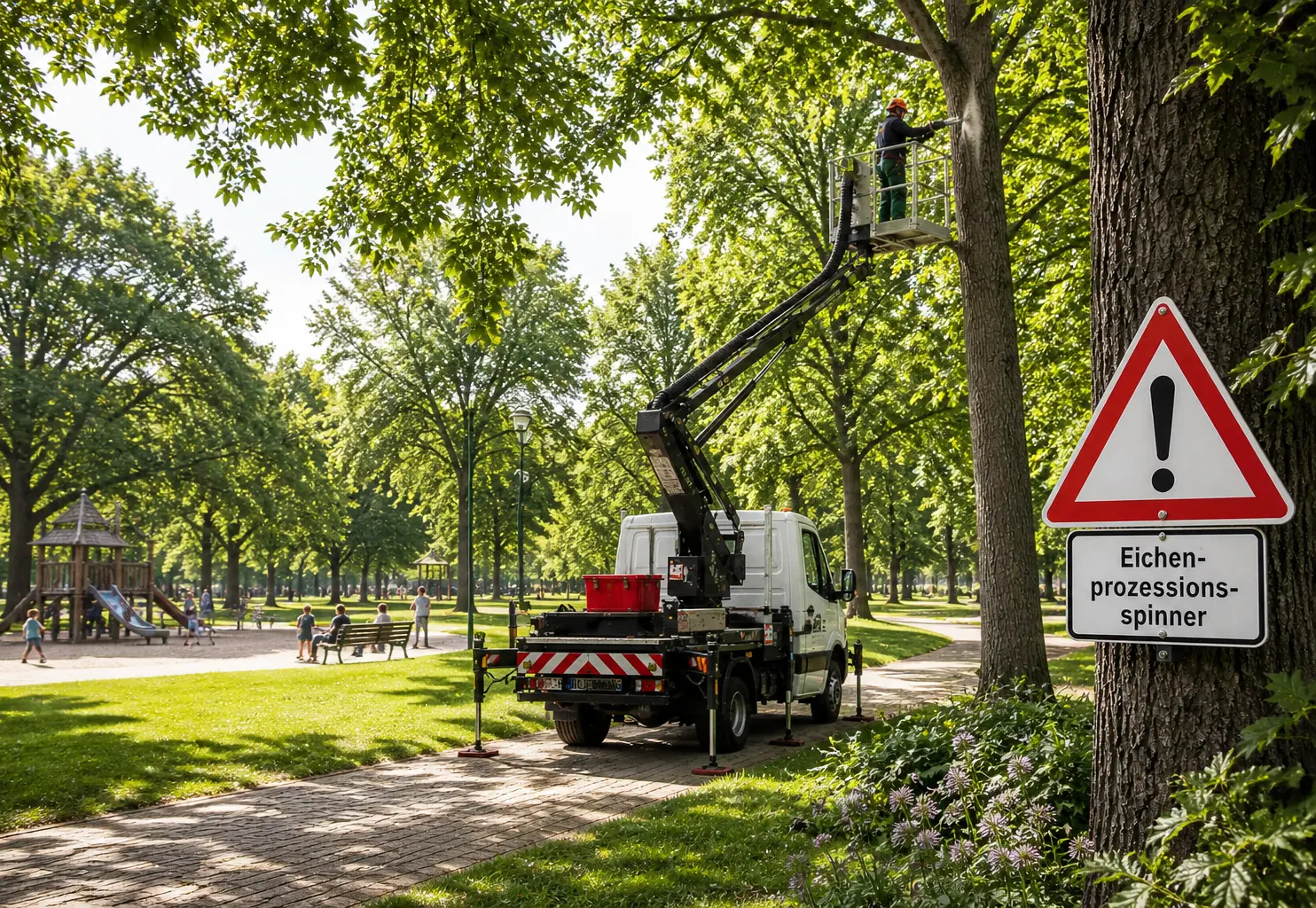
On school grounds and at daycare centers, oak processionary moth nests must be removed particularly quickly. Even a single nest can result in play areas or schoolyards having to be closed off.
Municipal maintenance departments or contracted tree care companies therefore often vacuum the nests directly to remove the stinging hairs in a controlled manner and quickly make the area usable again.
Municipal maintenance departments use industrial vacuum cleaners to remove oak processionary moth nests from street trees and then dispose of them. This allows high-traffic areas such as sidewalks and school routes to be quickly made safe.
Tree care and landscaping companies also regularly remove nests from parks and green spaces. The colonies of caterpillars are vacuumed directly from the trunk or the crown and then disposed of properly.
Use industrial vacuums even outside the EPS season
The vacuum can be used for more than just removing oak processionary moths. Municipal agencies and service providers also use it for other tasks.
Typical applications:
- Cleaning playgrounds and green spaces
- Removing dust and debris from construction yards
- Vacuuming up leaves and organic debris
- Cleaning of machinery and vehicles
This ensures that the device remains in regular use even outside the EPS season.
Which solution is right for your EPS control needs?
The removal of oak processionary moths presents different challenges depending on the location. The size of the trees, the number of nests, and accessibility determine which equipment is best suited for the job. Our experts assist municipalities, municipal maintenance departments, and tree care and landscaping companies in selecting a suitable suction solution.
Questions about removing the oak processionary moth
The oak processionary moth typically appears between May and July. During this time, the caterpillars build their web-like nests on oak trees and pose an increased health risk.
When brushing or scraping, stinging hairs can spread throughout the area. When vacuuming, caterpillars, nests, and hairs are immediately picked up and collected in a controlled manner.
Removal is often carried out by municipal maintenance departments, tree care companies, landscaping firms, or specialized pest control companies.
The nests are collected in the vacuum cleaner's collection bin and then disposed of in accordance with local regulations.
Yes. Many businesses also use these machines for other tasks, such as cleaning green spaces, construction sites, or machinery, so the vacuum can be used year-round.