


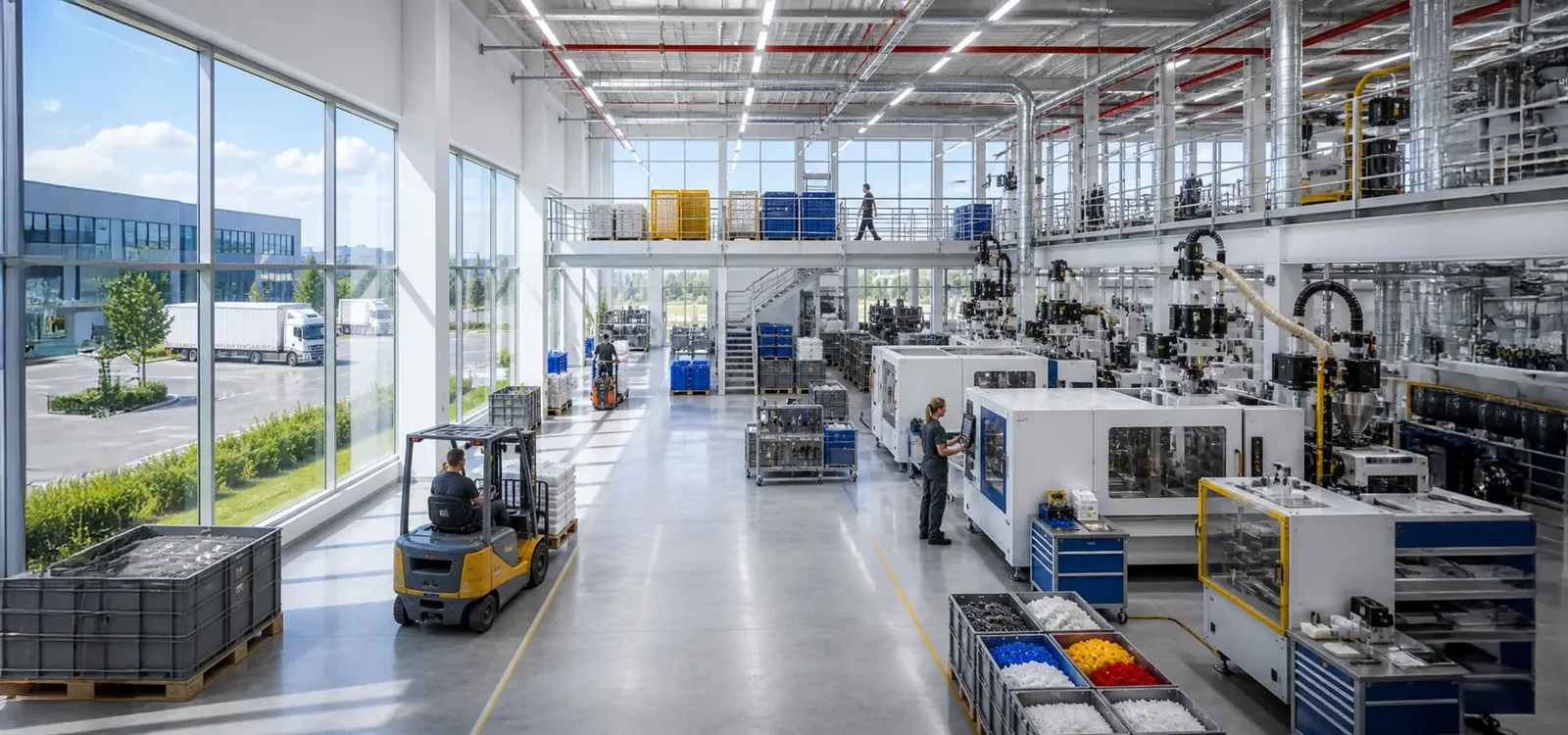
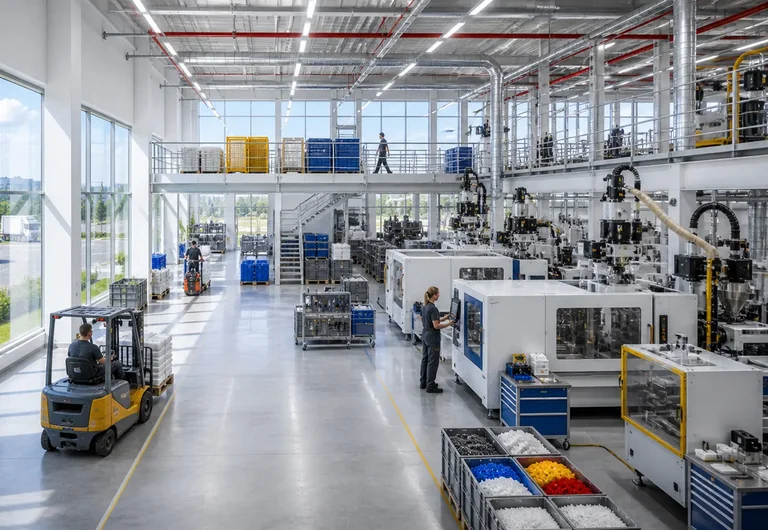
Plastics Processing
Reliable. Flexible. Consistent.
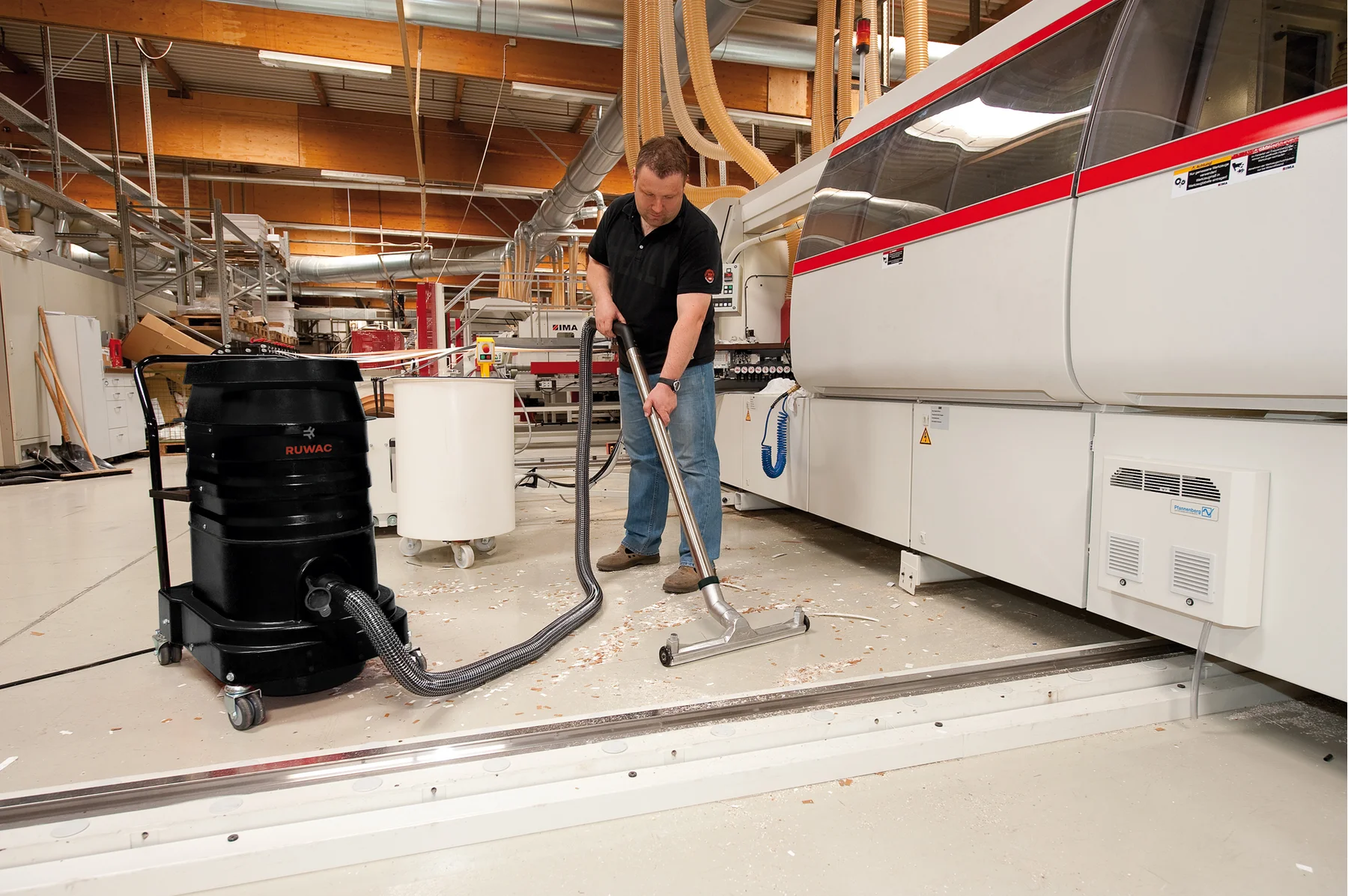
Fine dust and fiber particles are an inevitable part of plastics processing. RUWAC extraction solutions capture hazardous and explosive dust directly during the process—whether during grinding, milling, or mixing. For clean production environments, protected employees, and consistent quality across varying materials.
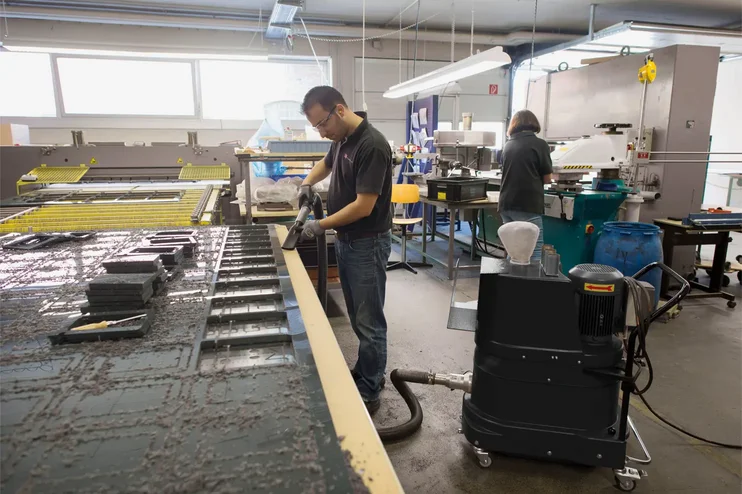
Plastics processing is precision work—but it generates byproducts that are difficult to control. Grinding, milling, sawing, or crushing produces fine dust and fiber residues, often from glass- or carbon-fiber-reinforced materials. These particles are respirable, electrically conductive, or explosive—and often remain in places where they are not immediately visible.
At the same time, processes are constantly changing. Materials change, colors vary, and batches follow in quick succession. Residues from earlier production steps must not contaminate new components. Downtime caused by time-consuming cleaning is just as unacceptable as compromises in occupational safety or explosion protection.
Added to this is the question of structure: a central extraction system or decentralized vacuum units? Integration into the tooling or a flexible cleaning solution? Every decision affects ergonomics, productivity, and investment security. And it must function even when dust volumes fluctuate, processes expand, or requirements become more stringent.
The challenge lies in reliably capturing dust—directly at the source, safely to handle, and stable during continuous operation. Without slowing down the production flow. And without taking risks that only become apparent later.
Under control. Even when requirements change.
In plastics processing, dust, fibers, and particles are generated directly during the process—during grinding, milling, sawing, or deburring. This is exactly where RUWAC comes in. Exhaust solutions capture hazardous and explosive substances directly at the source before they can spread into the room, onto surfaces, or into machinery.
This allows risks to be controlled early on, keeping work areas clean and processes stable. Extraction takes place close to the process—integrated into tools, machines, or workstations. This reduces the need for manual intervention, protects employees, and lays the foundation for consistent quality during ongoing operations.
Right at the source
Dust, fibers, and particles are captured before they can spread.
Protection for People and Processes
Reduced workload, clean work areas, and smooth operations.
Integrated into the process
Extraction right where the work is being done—not just afterward.
Thinking along with processes. And helping to shape them.
Plastics processing is rarely static. Materials change, tools are modified, and products vary. Exhaust systems must adapt to these changes—without having to be redesigned from scratch every time. RUWAC systems are modular and can be adapted to new requirements: from individual workstations to networked production environments.
Whether GRP, CGRP, or pigmented plastics; whether manual processing or series production—the system remains manageable even as processes change. This avoids creating an isolated solution and instead results in an extraction structure that grows with the operation and adapts to real-world conditions.
Easy to manage during material changes
Confident handling of various plastics, fibers, and formulations.
Adaptable to new processes
Modular and expandable – from a workstation to a complete system.
Future-proof system logic
Not isolated solutions, but structures that can be further developed.
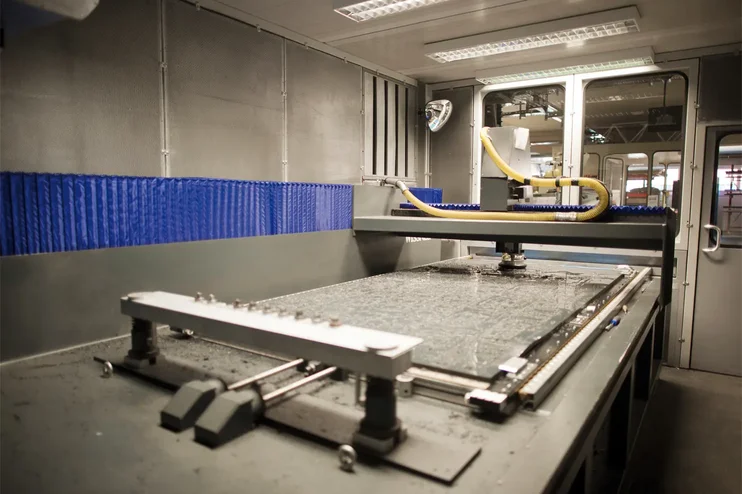
When concepts become part of everyday life.
In the plastics processing industry, occupational safety, explosion protection, and health and safety measures must function effectively during normal operations—not just as exceptions, but under real-world conditions. The following examples demonstrate how dust is effectively captured, risks are reduced, and processes are kept stable—all as an integral part of daily operations.
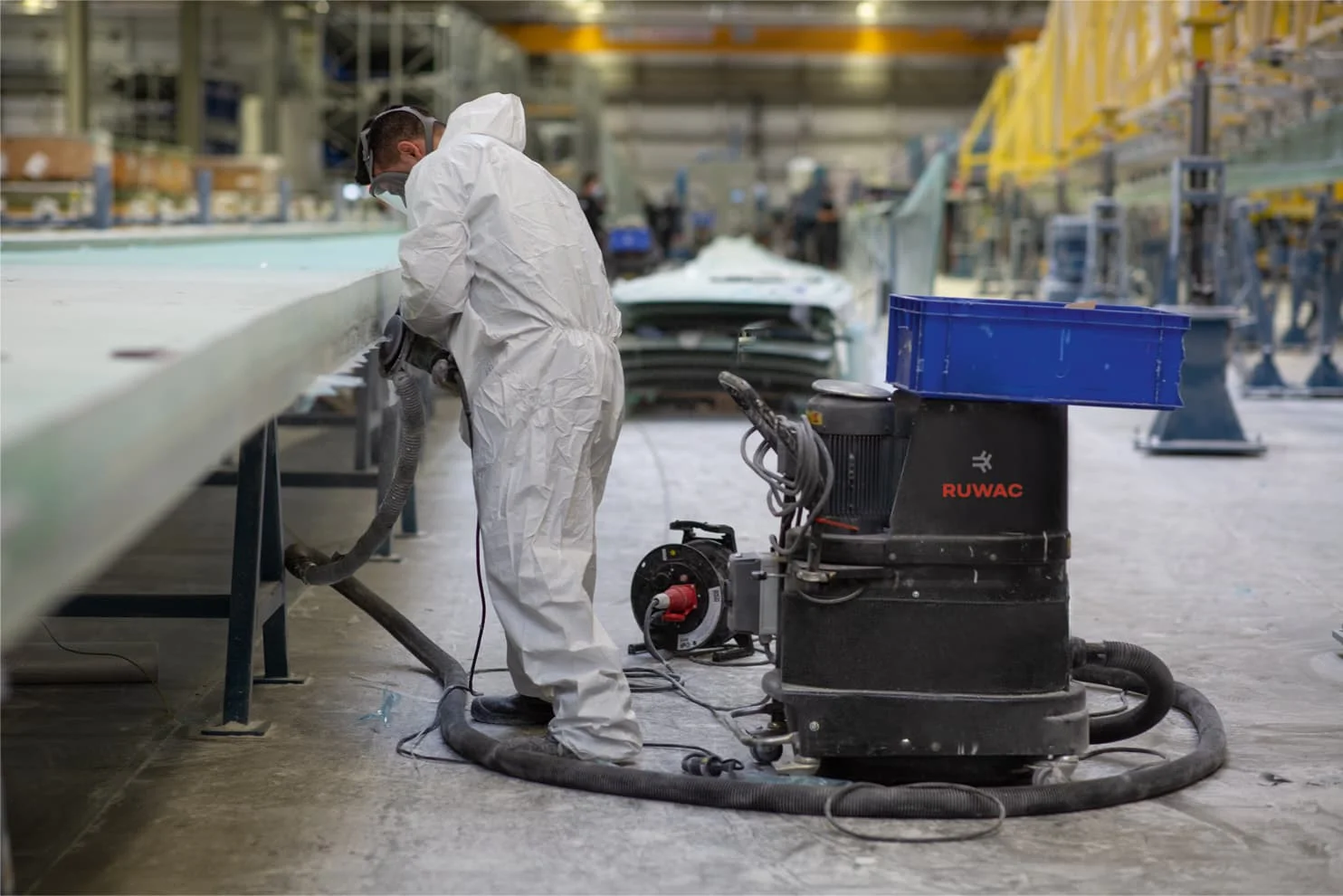
Protect health before exposure occurs.
Grinding rotor blades made of glass-fiber-reinforced plastic generates fine, respirable dust. This dust is harmful to health and must not be allowed to settle in the air or on surfaces. At Nordex, the grinding dust is captured directly at the tool and reliably removed via long hose runs. This keeps work areas clean, minimizes employee exposure, and ensures the grinding process remains ergonomically manageable—even with large-format components and changing processing steps.
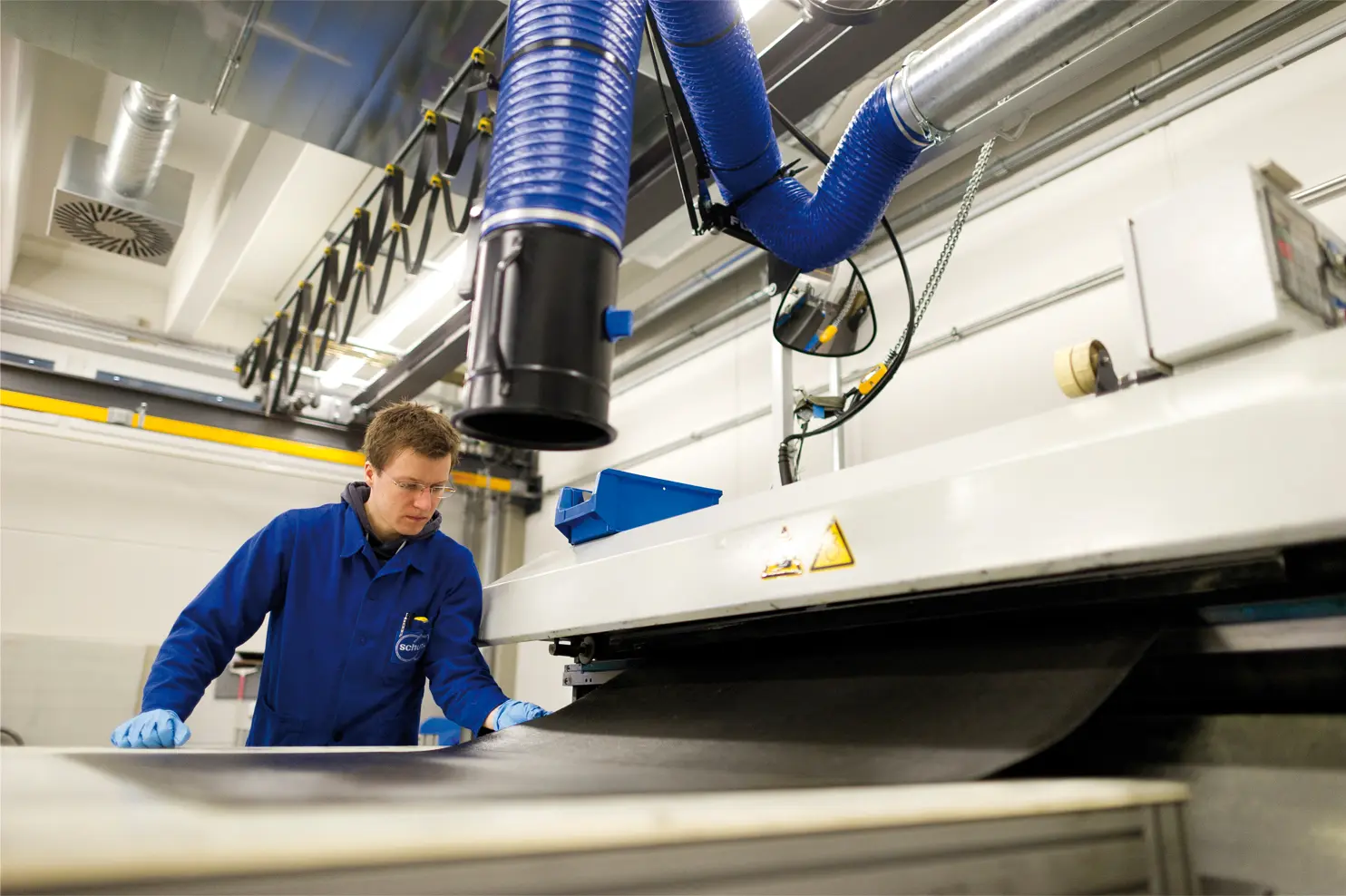
Staying clean, even with complex materials.
Carbon fiber dust is conductive, fine, and potentially explosive. In Schunk’s CGRP production, it is generated during numerous processing steps—spread throughout the entire facility.
The decision was made to implement a centralized extraction system with flexibly configurable extraction points. This allows dust to be captured close to the process without constantly having to reposition mobile units. The result: a tidy production layout, high flexibility, and safe extraction even with changing tasks.
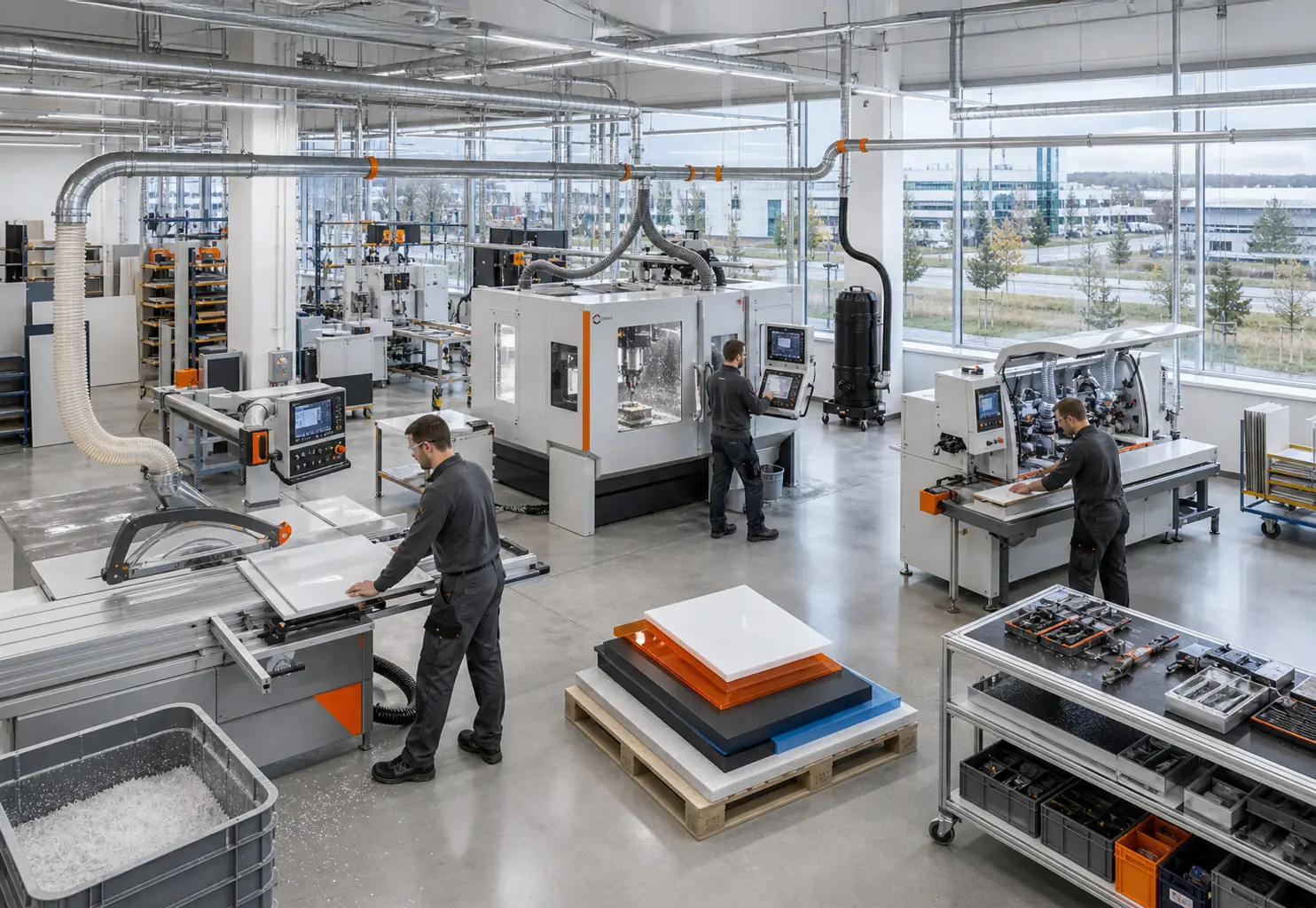
Safety that keeps pace with the process.
Whether sawing, drilling, or edge processing: In plastics processing, processes change frequently—as do materials and types of dust. Real-world examples show that integrated collection solutions on the tool and flexibly combinable extraction structures reduce risks without interrupting the workflow. Safety is not achieved through isolation, but through solutions that adapt to the process.
The right RUWAC systems for your processes.
Designed for in-process dust detection—effective wherever plastics are processed.
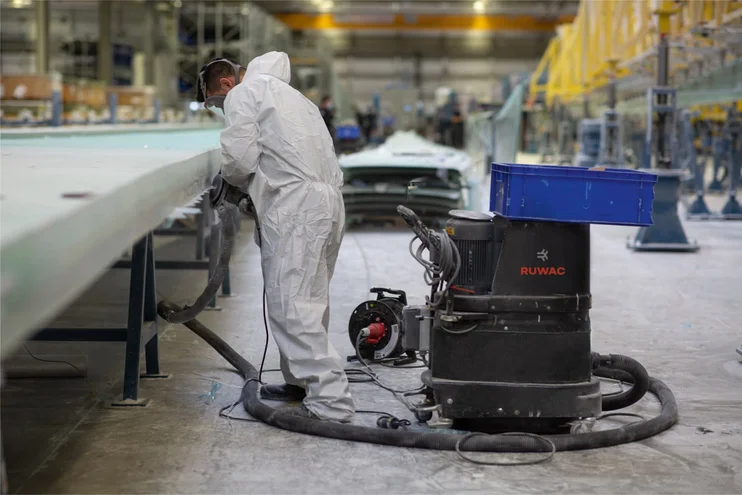
Manual processing and rework
Grinding, drilling, or sawing plastic components—especially those made of GRP and CGRP—generates fine, respirable dust. This dust must be captured directly at the tool to prevent exposure to employees and its spread throughout the work area.
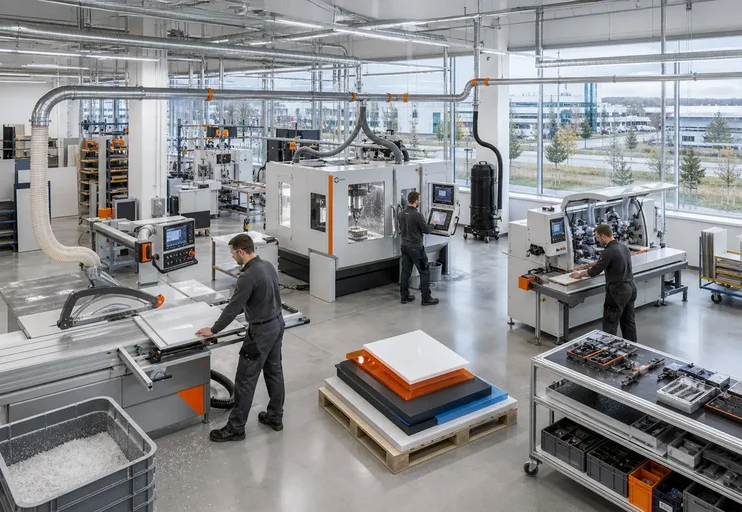
Machining and Mass Production
Machining operations continuously generate dust, chips, and fiber debris. Multiple machines and workstations must be reliably supplied without interrupting the production flow or overloading the facility’s infrastructure.
Variety of materials and colors
Frequent batch or color changes require thorough and rapid cleaning of machines and equipment. Residues from previous materials must not contaminate new products, and downtime must be kept to a minimum.
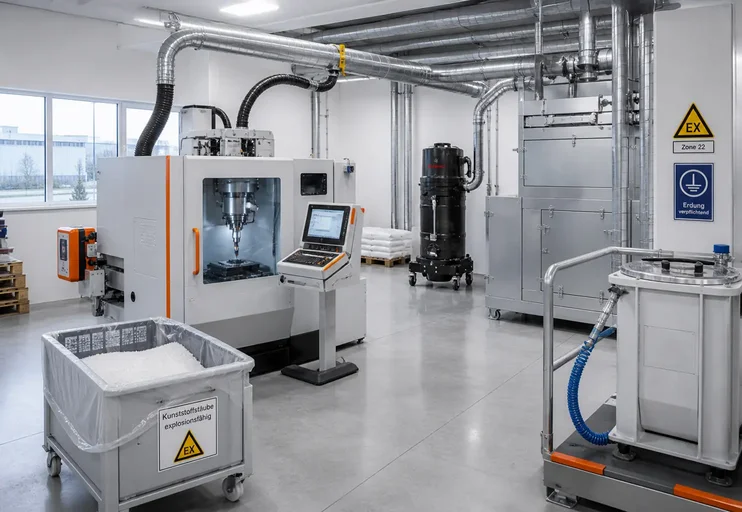
Safety-critical dusts and explosion protection
Many types of plastic dust are explosive or electrically conductive. In such cases, stricter occupational safety and explosion protection requirements apply, both during collection and during filtration and disposal.
Safety. From the ground up.
Plastics processing involves specific risks. Fine fiber and grinding dusts from GRP, CGRP, or thermosetting materials are harmful to health, can be electrically conductive, and may become explosive under certain conditions. At the same time, they often arise directly during manual or semi-automated processes—where safety must be ensured in a practical, hands-on manner. RUWAC solutions are designed to manage these risks at an early stage. Depending on the application, suitable filter technologies, conductive materials, and designs for dust-explosion-hazardous areas are used. Collection takes place as close as possible to the source—mobile, integrated into the tool, or as a central extraction solution. Safety is not an add-on here, but an integral part of every solution—from standard-compliant design through daily operation to long-term investment security.
Frequently Asked Questions (FAQ)
In plastics processing, the byproducts include GRP and CGRP dust, pigment residues, additives, as well as chips and granules. Depending on the material, processing step, and concentration, these can be hazardous to health, explosive, or critical to the process.
Not all plastic dust is explosive. The key factors are particle size, concentration, and the process environment. In many applications, however, a design suitable for dust-explosion-hazard zones is advisable in order to effectively manage risks and ensure compliance with standards.
Mobile vacuum cleaners are suitable for changing workstations, manual tasks, and flexible processes. Stationary or centralized extraction systems are recommended when dust is generated continuously, multiple sources need to be connected, or high airflow rates are required.
This is very important. The closer dust, fibers, or chips are captured at the source, the lower the exposure, the less they spread throughout the room, and the less cleaning is required. Direct capture significantly improves working conditions and process stability.
Yes. Many RUWAC systems are modular in design and can be adapted to different materials, new machines, or other production conditions—from accessories to the expansion of entire plants.
Let's talk about your processes.
Whether it’s a single workstation, mass production, or safety-critical applications: We help you capture dust and fibers right where they’re generated—safely, in compliance with standards, and in a practical way. We’ll work with you one-on-one to determine which system is best suited to your process.