


Dust explosion risks do not arise suddenly—they develop over time. Dust settles, accumulates, and is repeatedly stirred up during operation. These secondary emissions are often more dangerous than the original generation process because they create explosive atmospheres without being noticed. Effective dust explosion protection must therefore control deposition, resuspension, and recirculation equally. What matters is not the dust itself, but its state within the process—and the ability to control it continuously.
Dust remains. So does the risk.
Dust explosion hazards rarely arise at the moment of processing. They build up over time—through accumulation, resuspension, and operational routines. Dust becomes part of the environment and is set in motion again during cleaning, maintenance, or restarting. Thus, risks do not arise in individual process steps, but rather through the interplay of generation, accumulation, and release.
The following misconceptions illustrate where dust explosion protection loses control in the workplace—not abruptly, but gradually.
Dust leaves no room for error. Neither does safety.
Effective dust explosion protection does not begin with the equipment, but with the design. The key factor is how dust is generated, settles, is resuspended, and can ultimately be captured or removed in the actual process.
Safe solutions must be preventive. Dust must not be allowed to accumulate or spread uncontrollably, but must be captured and directed as close as possible to the point of origin. This requires process-oriented capture, adequately sized air ducts, and technology that operates reliably even with fluctuating dust levels.
Equally crucial is the control of potential ignition sources. Materials, filters, drives, and accessories must be designed to prevent electrostatic charging, safely dissipate energy, and pose no risk even under adverse conditions. Explosion protection is not a single feature but the result of a coordinated system architecture.
Added to this is suitability for everyday use. EX protection must function where cleaning, retrofitting, and intervention take place—not just under ideal conditions. Solutions that are safe only under laboratory conditions quickly lose their effectiveness in operation.
Dust explosion protection is not an add-on module. It is the result of a thoroughly thought-out comprehensive solution.
Dust explosion protection is developed through practical application—not just theory.
Dust explosion risks are not limited to specific industries. They arise wherever fine, dry dust is released, moved, or resuspended during normal operations—often regardless of formal zone classifications.
In the chemical industry, explosive dusts are generated during dosing, mixing, or product changeovers. Controlled capture under varying operating conditions is crucial here.
In the pharmaceutical industry, dust EX risks occur primarily with powdered active ingredients and excipients—often in sensitive areas involving manual operations and high standards for cleanliness and safety.
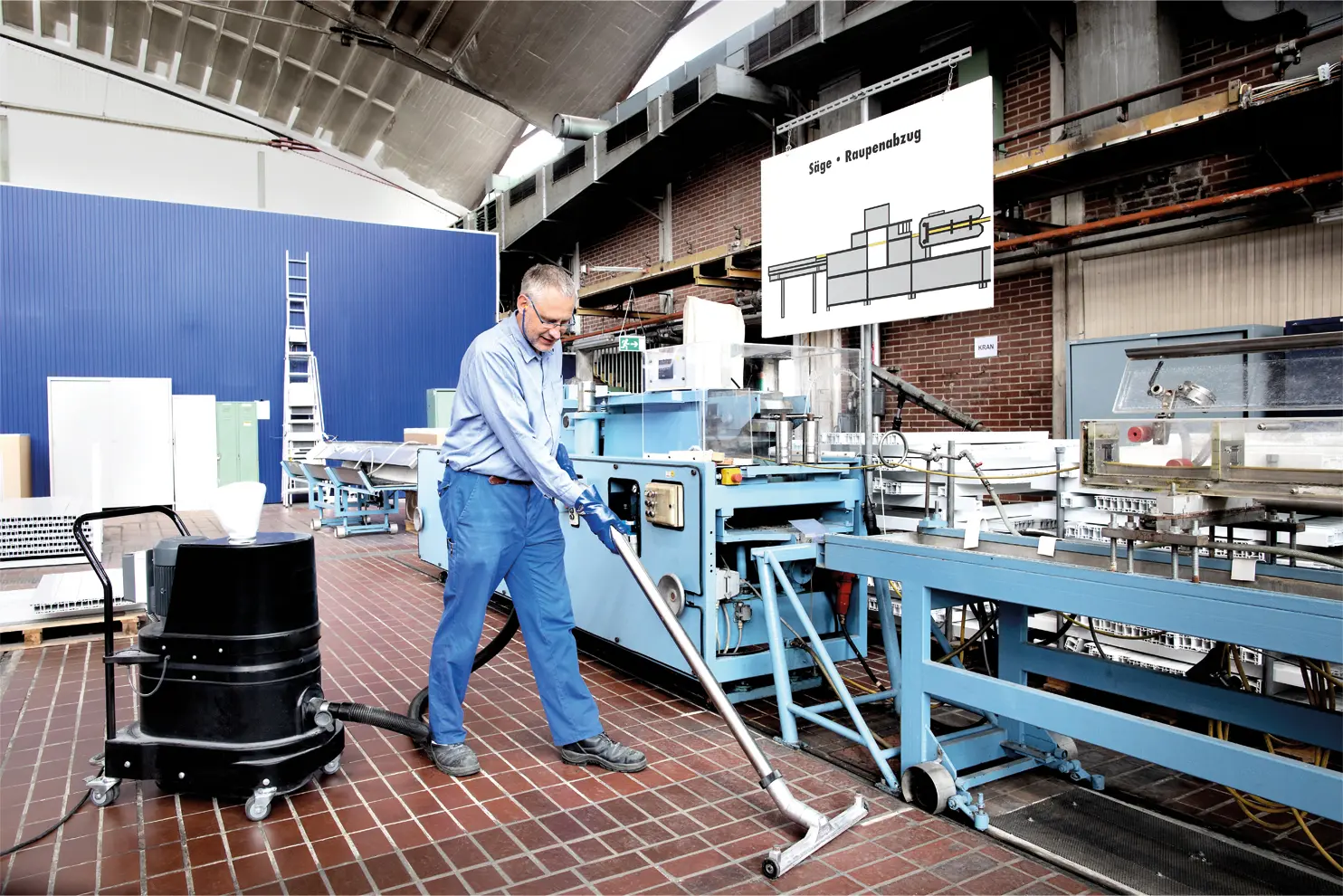
In plastics processing, grinding, milling, and crushing steps release fine particles that easily settle and can be resuspended—often directly at the workstation.
In metal processing, explosive dusts are generated particularly during the machining of light metals such as aluminum or magnesium, often combined with thermal stresses and spark hazards.
In the building materials and food industries, organic and mineral dusts are part of everyday production—widely distributed, continuously present, and not always immediately visible.
What these industries have in common is not the type of dust, but the situation:
dust explosion risks arise during normal operation—not in exceptional cases.
Safe concepts must therefore be effective where processes actually take place. Day after day. Under load. And with people in the system.
Practice born of necessity.
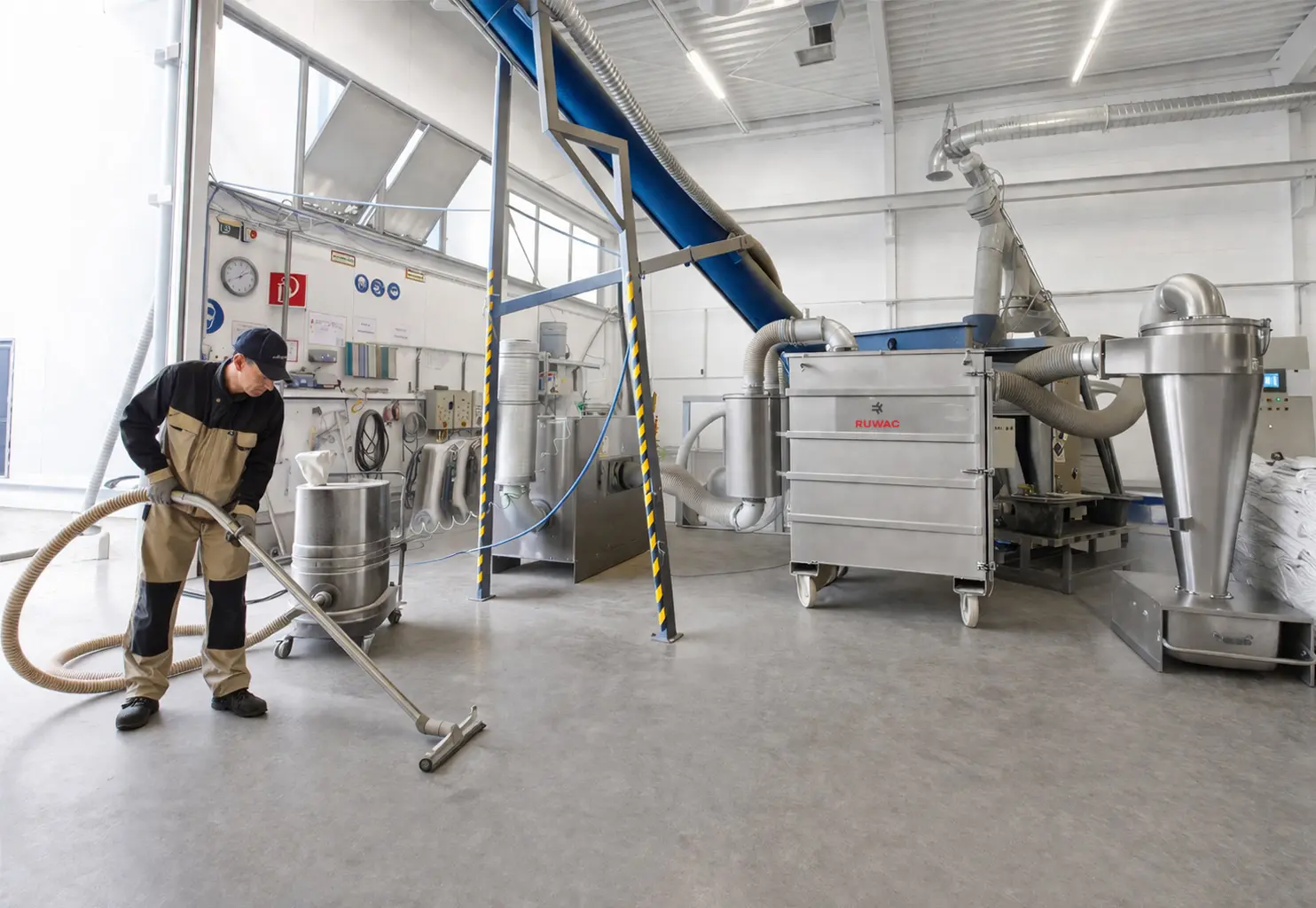
Dust explosion protection is not proven on paper, but in actual operation. In practice, the goal is to control dust where it is generated, settles, or is resuspended—often under time pressure, with varying materials, and involving manual intervention. The following examples illustrate typical application scenarios in which dust explosion risks must be addressed directly within the process.
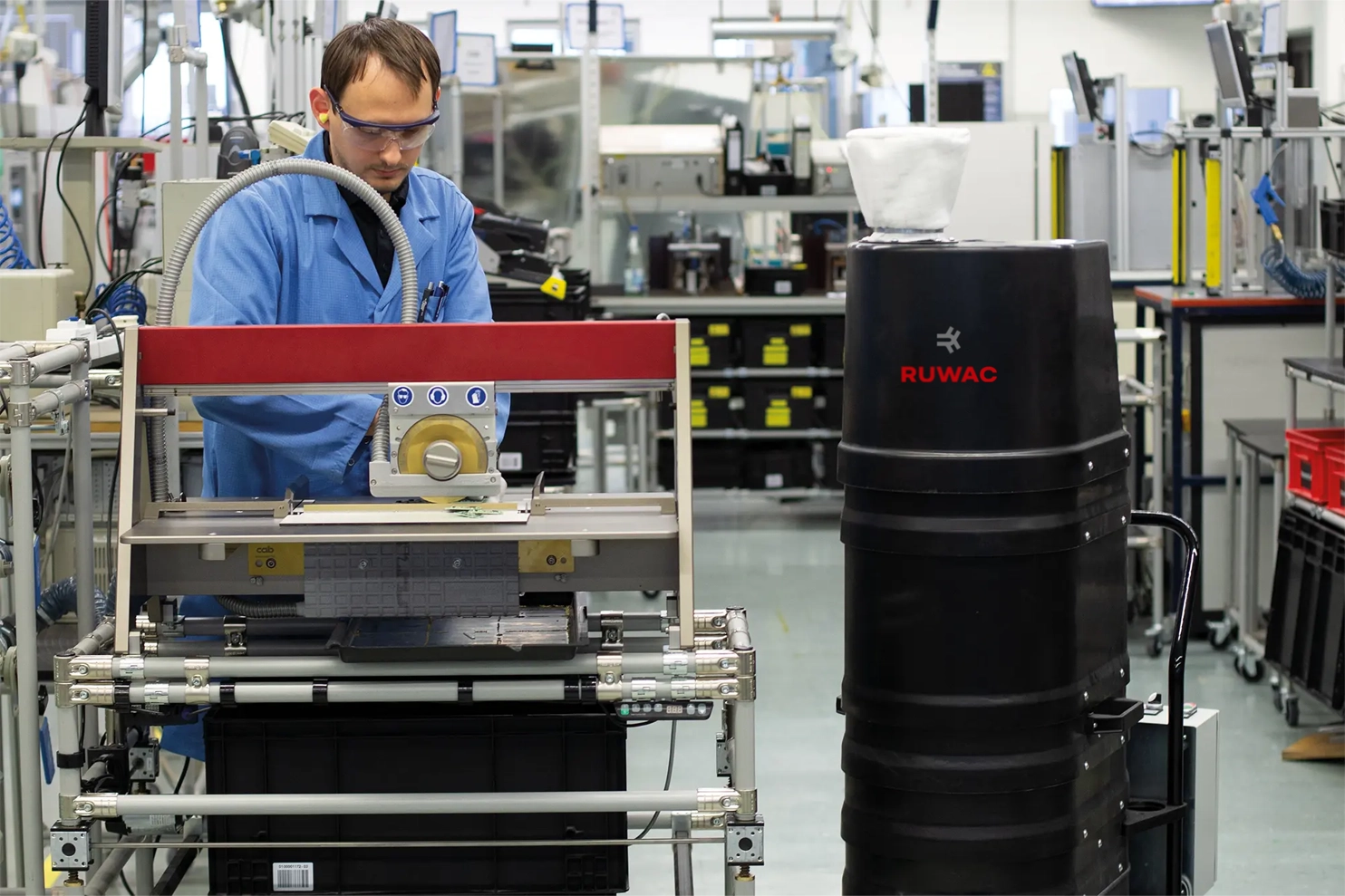
The milling and separation of printed circuit boards generate fine dust consisting of glass fibers and resins. This dust is harmful to health, can be electrically conductive, and, under certain conditions, can create explosive atmospheres.
Capture takes place directly at the source. Dust is collected before it spreads throughout the workspace or settles on surfaces.
This transforms a difficult-to-control risk into a stable, manageable process.
In the pilot plant, materials, formulations, and process parameters change. What remains are residues that must be removed immediately and reliably to ensure safety and reproducibility.
The extraction system adapts to these changes. It follows the process—not the other way around.
The result is clean equipment, safe working conditions, and a work environment that enables development rather than hindering it.
Magnesium and aluminum powders are highly reactive. Even small amounts can pose a serious risk if they are released or stirred up in an uncontrolled manner.
The extraction system specifically removes these dusts from the process and captures them in a controlled manner before they become a hazard.
This ensures that handling reactive materials remains safe and manageable even at high throughput rates.
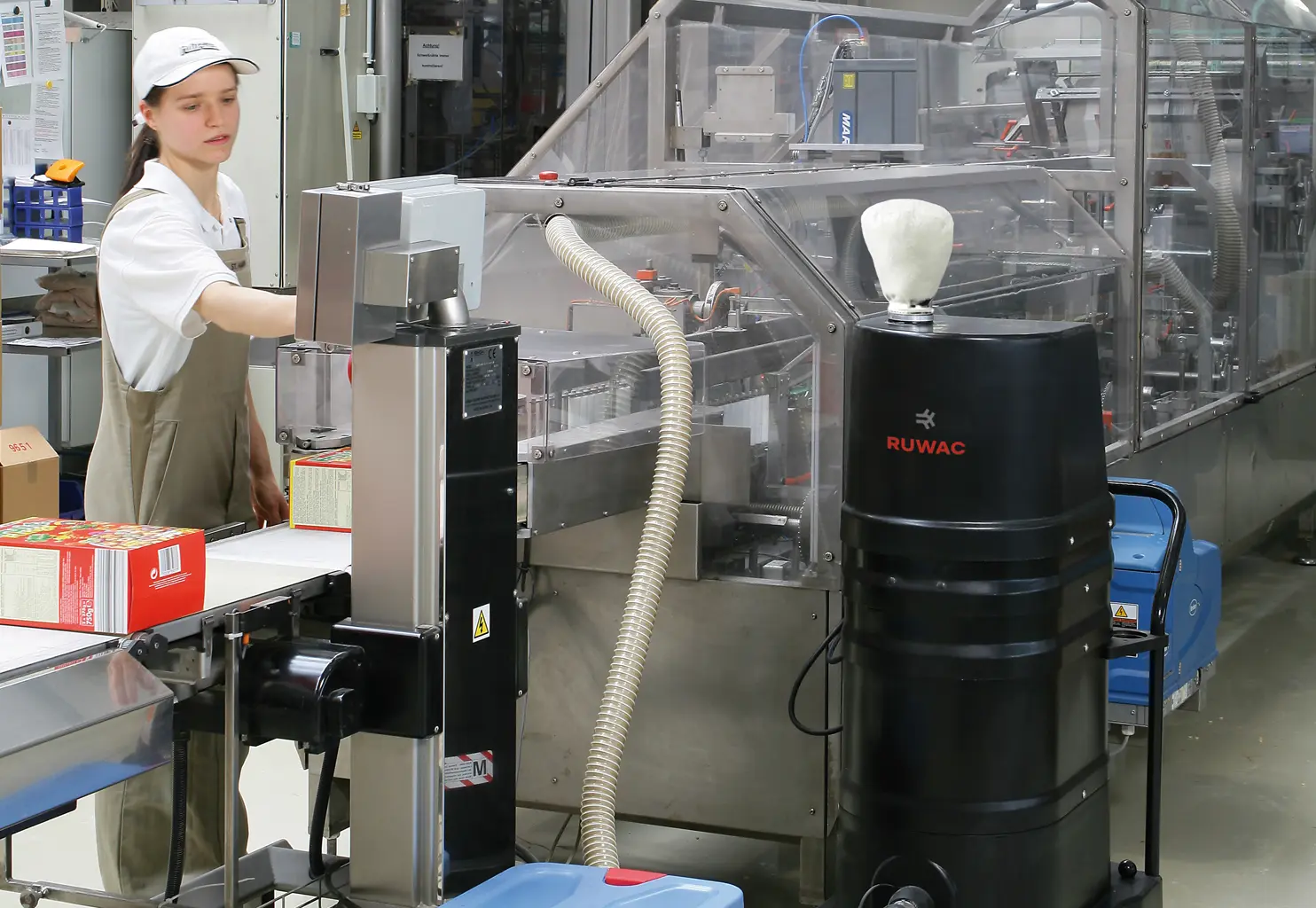
The processing and loading of dry food products generates fine organic dust. While it may seem harmless, it can ignite if it spreads unchecked.
Mobile extraction solutions capture these particles directly during the work process and prevent their spread.
The environment stays clean—and an often-underestimated explosion risk is reliably controlled.
Product concepts for safe processes.
Dust explosion protection requires more than just dust detection. The key factors are when, where, and in what condition dust is present in the process. The following product concepts are designed for typical situations in which explosive atmospheres can form—and demonstrate how risks can be managed at the process level.
Frequently Asked Questions (FAQ)
It is not the dust itself that matters, but its condition. Fine particles—dry, stirred up, and mixed with air—can create explosive atmospheres—often during normal operation, not just in exceptional circumstances.
No. Zones describe risks, but they do not prevent them. What matters is how dust is generated, settles, and is stirred up again. Effective protection starts with the process, not with the plan.
A central vacuum system reduces dust concentrations, prevents buildup, and minimizes dust resuspension. It serves as a preventive measure—provided it is properly designed and integrated into the process.
For highly reactive or particularly hazardous dusts, such as aluminum, magnesium, or mixed dusts. A wet separator prevents the formation of an explosive atmosphere within the system.
No. Risks also arise during cleaning, maintenance, or manual tasks. It is precisely in these situations that they are often underestimated.
Jointly Assessing Dust Explosion Protection
Dust explosion protection is not a matter of off-the-shelf solutions, but of understanding the process. The appropriate measures depend on the material, the source of the dust, and actual operating procedures. RUWAC helps you accurately assess dust explosion risks and develop practical protection strategies—integrated into your processes and implemented in a transparent manner.